

Newton's Second Law Example: Net Force Equals Mass Times Acceleration, Shown in 10 Real-Life and Calculation Problems
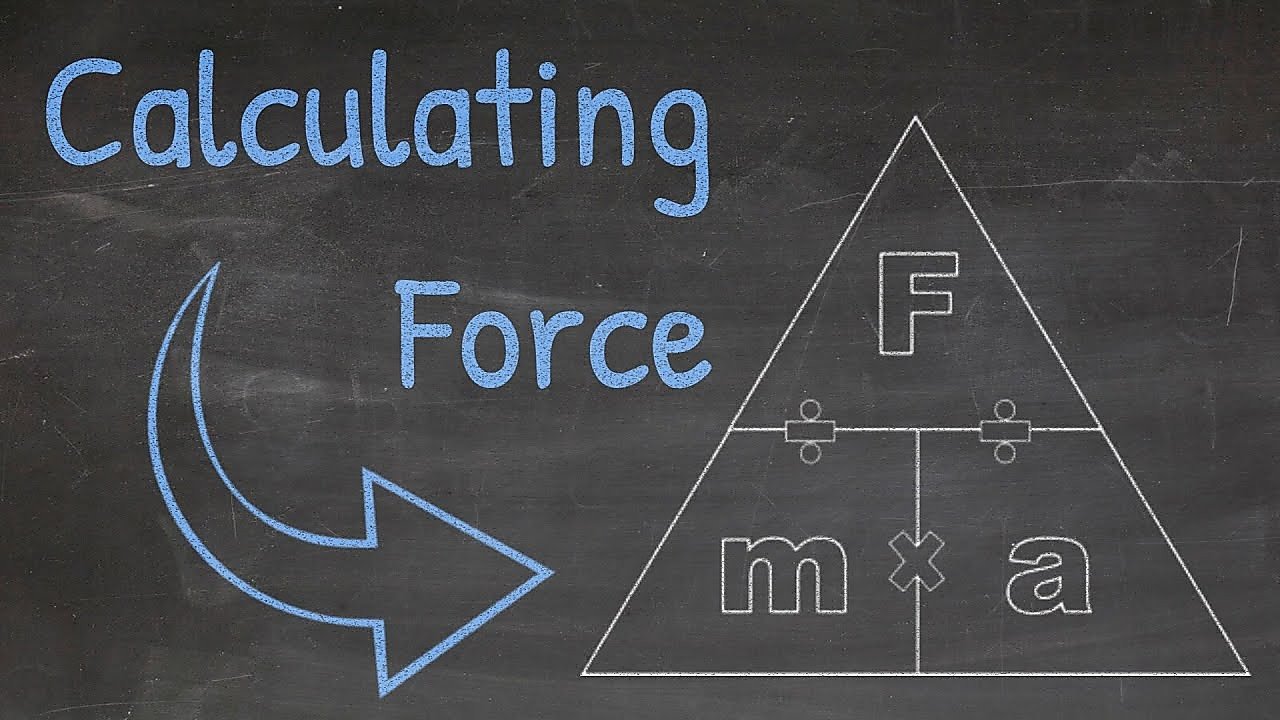
A Newton's second law example is a pushed shopping cart, where a 20 N net force gives a 10 kg cart an acceleration of 2 m/s². Newton's second law states that net force equals mass times acceleration, Fnet = ma. This article covers the definition, formula, units, 10 worked examples, a step-by-step method, and common mistakes.
What Is Newton's Second Law of Motion?
Newton's second law states that the acceleration of an object is directly proportional to the net force acting on it and inversely proportional to its mass. According to OpenStax Physics, a net external force is responsible for the acceleration of an object. The acceleration points in the same direction as the net force, as stated in a University of Tennessee physics module.
Net force is the vector sum of all forces acting on an object. Vector quantities include force, velocity, acceleration, and displacement. The table below defines each symbol in the second law.
| Symbol | Quantity | SI Unit | Definition |
|---|---|---|---|
| Fnet | Net force | N (newton) | Vector sum of all forces on the object |
| m | Mass | kg | Measure of an object's inertia |
| a | Acceleration | m/s² | Rate of change of velocity |
The SI unit of force is the newton. One newton equals 1 kg·m/s², which is the force that accelerates a 1 kg mass at 1 m/s², according to OpenStax.
What Is the Formula for Newton's Second Law?
The formula for Newton's second law is Fnet = ma, where Fnet is net force, m is mass, and a is acceleration. The table below lists 6 forms of the second law.
| No. | Form | Equation | Use |
|---|---|---|---|
| 1 | Net force | Fnet = ma | Find force from mass and acceleration |
| 2 | Acceleration | a = Fnet / m | Find acceleration from force and mass |
| 3 | Mass | m = Fnet / a | Find mass from force and acceleration |
| 4 | Momentum form | Fnet = dp/dt | Motion with changing mass, such as a rocket |
| 5 | Weight | W = mg | Force of gravity on a mass |
| 6 | Component form | ΣFx = max, ΣFy = may | Motion in two dimensions |
The symbol p is momentum (kg·m/s), W is weight (N), and g is gravitational acceleration (9.8 m/s² near Earth's surface).
How Do Force and Mass Change Acceleration?
Acceleration increases when net force increases and decreases when mass increases. Doubling the net force doubles the acceleration. Doubling the mass halves the acceleration. The table below shows 6 combinations of net force and mass.
| Net Force (N) | Mass (kg) | Acceleration (m/s²) | Change From Previous Row |
|---|---|---|---|
| 10 | 5 | 2 | Starting value |
| 20 | 5 | 4 | Force doubled, acceleration doubled |
| 40 | 5 | 8 | Force doubled again, acceleration doubled again |
| 20 | 10 | 2 | Mass doubled from 5 kg, acceleration halved from 4 m/s² |
| 20 | 20 | 1 | Mass doubled, acceleration halved |
| 20 | 40 | 0.5 | Mass doubled, acceleration halved |
What Are 10 Examples of Newton's Second Law?
The 10 examples below fall into 4 groups: everyday motion, vertical motion, inclines and pulleys, and two-dimensional motion. Each example lists known values and the calculated result.
What Are Everyday Examples of Newton's Second Law?
Everyday examples include pushing a shopping cart, kicking a ball, accelerating a car, braking a car, and pulling a sled. The list below shows 5 calculations.
- Shopping cart: a 20 N net force gives a 10 kg empty cart an acceleration of 2 m/s² (20 / 10). The same force gives a 40 kg loaded cart 0.5 m/s² (20 / 40).
- Ball: an assumed 100 N net force gives a 0.4 kg ball 250 m/s² (100 / 0.4) and a 4 kg ball 25 m/s² (100 / 4).
- Car accelerating: a 3,000 N net force on a 1,200 kg car gives 2.5 m/s² (3,000 / 1,200). After 10 s from rest, the speed is 25 m/s (v = at).
- Car braking: a 6,000 N braking force on a 1,200 kg car gives -5 m/s² (-6,000 / 1,200). A car at 20 m/s stops in 4 s (20 / 5) over 40 m (20² / (2 × 5)).
- Sled with friction: a 50 N pull and a 20 N friction force leave a 30 N net force. A 25 kg sled accelerates at 1.2 m/s² (30 / 25).
What Are Vertical Motion Examples of Newton's Second Law?
Vertical motion examples include a rocket launch, an elevator ride, and a skydiver at terminal velocity. Gravity acts in each case, so the net force equals the applied force minus the weight. The list below shows 3 calculations.
- Rocket launch: a 2,000 kg rocket has a weight of 19,600 N (2,000 × 9.8). A thrust of 30,000 N leaves a net force of 10,400 N. The upward acceleration is 5.2 m/s² (10,400 / 2,000).
- Elevator ride: a 70 kg person has a weight of 686 N (70 × 9.8). The scale reading is N = m(g + a). The reading is 791 N when the elevator accelerates upward at 1.5 m/s² and 581 N when it accelerates downward at 1.5 m/s².
- Skydiver at terminal velocity: air drag equals weight, so the net force is 0 N. The acceleration is 0 m/s², and the velocity stays constant.
What Are Incline and Pulley Examples of Newton's Second Law?
Incline and pulley problems apply the second law along a chosen axis. The list below shows 2 calculations.
- Frictionless incline: a block on a 30° incline has a = g sin θ = 9.8 × 0.5 = 4.9 m/s². The acceleration does not depend on mass.
- Atwood machine: masses of 2 kg and 3 kg hang from a pulley. The acceleration is a = (m₂ – m₁)g / (m₁ + m₂) = (1 × 9.8) / 5 = 1.96 m/s². The rope tension is T = m₁(g + a) = 2 × 11.76 = 23.52 N.
What Is a Two-Dimensional Example of Newton's Second Law?
A two-dimensional example applies the second law to each axis and combines the results as vectors. A 3 N force acts east and a 4 N force acts north on a 2 kg object. The net force is 5 N at 53° north of east (√(3² + 4²)). The acceleration is 2.5 m/s² (5 / 2) in the same direction as the net force.
How Do You Solve a Newton's Second Law Problem Step by Step?
To solve a Newton's second law problem, sum the forces on the object and divide the net force by the mass. Follow these 6 steps:
- Draw a free-body diagram of the object.
- Choose a positive direction for each axis.
- List every force acting on the object.
- Write ΣF = ma for each axis.
- Solve for the unknown quantity.
- Check the units and the direction of the result.
How Does Newton's Second Law Relate to Weight?
Weight is the force of gravity on a mass, W = mg. OpenStax derives the weight equation from Newton's second law with a = g. Near Earth's surface, g is about 9.8 m/s².
A 5 kg object has a weight of 49 N (5 × 9.8). Mass is measured in kilograms and has no direction. Weight is measured in newtons and points toward Earth's center.
What Is the Difference Between Newton's First, Second, and Third Laws?
Newton's first law describes motion with zero net force, the second law relates net force to acceleration, and the third law describes force pairs. The table below compares the 3 laws.
| Law | Statement | Key Equation | Example |
|---|---|---|---|
| First | An object keeps its velocity unless a net external force acts on it | ΣF = 0 gives a = 0 | Skydiver at terminal velocity |
| Second | Net force equals mass times acceleration | Fnet = ma | Pushed shopping cart |
| Third | Two interacting objects exert equal and opposite forces on each other | FAB = -FBA | Rocket exhaust and rocket thrust |
Newton's second and third laws apply in all inertial reference frames, according to the University of Tennessee module.
What Mistakes Occur in Newton's Second Law Problems?
Five mistakes cause most errors.
- Using a single force instead of the net force
- Mixing mass (kg) with weight (N)
- Ignoring the sign of each force direction
- Omitting friction, normal force, or tension from the force list
- Skipping unit conversion, such as grams to kilograms and km/h to m/s
Where Is Newton's Second Law Used in Real Life?
Newton's second law applies to 5 main fields.
- Automotive engineering: calculating braking force and stopping distance
- Aerospace engineering: calculating rocket thrust and launch acceleration
- Civil engineering: estimating loads on structures from accelerations
- Sports science: measuring force during sprints and jumps
- Biomechanics: analyzing forces in human movement
What Do People Also Ask About Newton's Second Law Examples?
What is a simple example of Newton's second law?
A pushed shopping cart is a simple example, because a heavier cart accelerates less under the same push.
What is the formula for Newton's second law?
The formula for Newton's second law is Fnet = ma.
What is the unit of force in Newton's second law?
The unit of force is the newton, and 1 N equals 1 kg·m/s².
What happens if the net force is zero?
Acceleration is zero, and velocity stays constant.
How does mass affect acceleration?
Acceleration is inversely proportional to mass, if the net force stays constant.
How does force affect acceleration?
Acceleration is directly proportional to net force, if the mass stays constant.
What is an example of Newton's second law in sports?
A harder kick applies a larger net force to a ball, so the ball accelerates more.
What is an example of Newton's second law in a car?
A braking car has a negative acceleration equal to the braking force divided by the car's mass.
What is the difference between mass and weight?
Mass measures inertia in kilograms, and weight is the gravitational force in newtons.
Does Newton's second law apply to constant velocity?
Yes, constant velocity means zero acceleration, so the net force is zero.
What Is a Newton's Second Law Example in Summary?
A Newton's second law example is a net force producing an acceleration inversely proportional to mass, Fnet = ma. The SI unit of force is the newton, equal to 1 kg·m/s². A 20 N net force gives a 10 kg cart 2 m/s² and a 40 kg cart 0.5 m/s². Vertical, incline, pulley, and two-dimensional problems follow the same equation with forces summed along each axis. Zero net force gives zero acceleration.
SEO title: Power Reducing Formula: 3 Identities and 7 Worked Examples

The University of the West Indies
My passion as a teacher and leader in education is to contribute to students’ enhanced learning by creation of a positive teaching/learning environment, where they are motivated to develop strong critical thinking, analytical and problem-solving skills.
As acting Vice-Principal and head of Physics, I have amassed five years of experience in leading meetings, implementing strategies to maintain discipline and school ethos, liaise with stakeholders in planning for future development of the institution; successfully negotiated the implementation of various projects for student development as well as supervising effective execution of such. For the past 19 years, I have incorporated discovery learning within the classroom through practical activities, problem solving and cooperative learning and have realized that students retention in Physics and Mathematics have increased significantly.
I am always cognizant that students have different learning styles, and as such teaching strategies during planning and delivery must take this crucial factor into consideration and be tailored to meet such differences.