

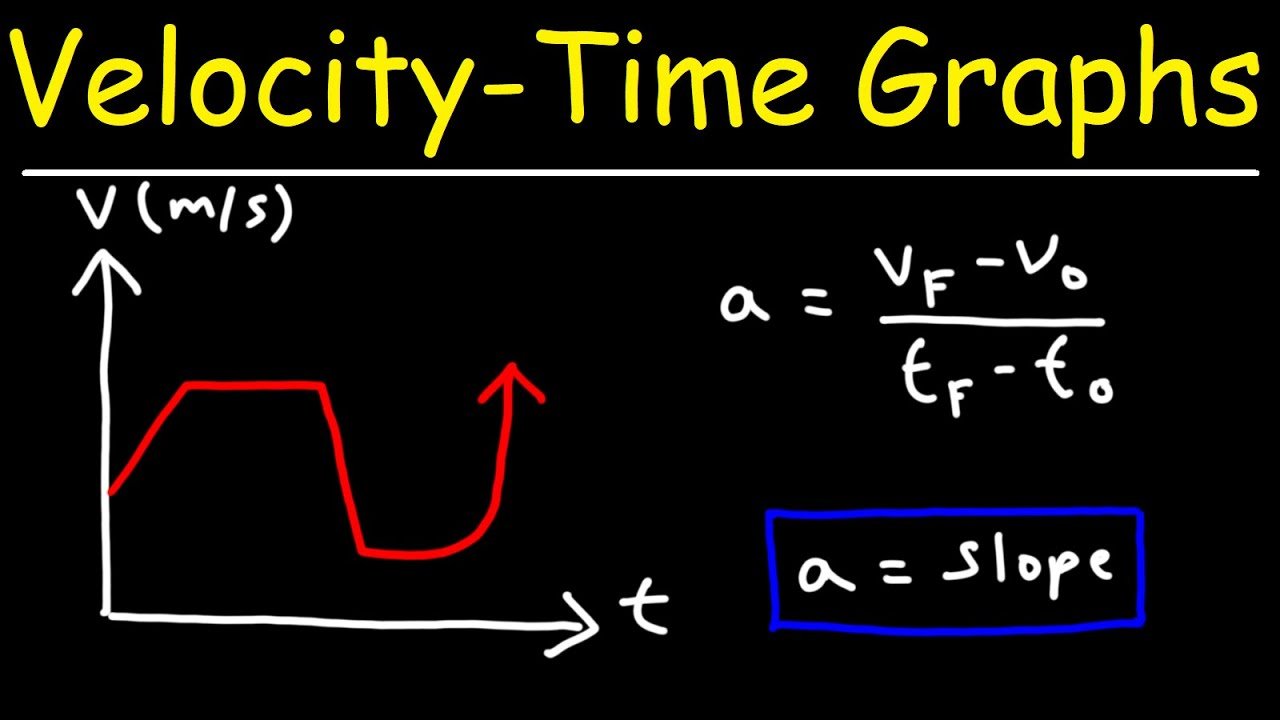
Gradient of a Velocity Time Graph: How to Find Acceleration Using the Slope
The gradient (GB) or slope (US) of a velocity time graph equals the acceleration of the object. Gradient and slope are the same measurement. They are calculated by dividing the change in velocity by the change in time: a = Δv/Δt. The unit of acceleration is metres per second squared (m/s²). This acceleration is the a variable used in the SUVAT equations.
For a supporting reference, The Physics Classroom’s velocity-time graph acceleration tutorial explains how slope on a velocity-time graph gives acceleration.
What Does the Gradient of a Velocity Time Graph Represent?
The gradient of a velocity time graph represents acceleration. In UK curricula (GCSE and A-Level Physics), the term gradient is standard. In US curricula (AP Physics), the equivalent term is slope. Both describe the same calculation: the rise of the graph divided by the run, applied to a velocity time graph.
A steeper gradient (slope) means a higher rate of acceleration. A shallower gradient means a lower rate of acceleration. A horizontal line has zero gradient and zero acceleration.
What Is the Formula for the Gradient (Slope) of a Velocity Time Graph?
The formula for the gradient or slope of a velocity time graph is: a = Δv / Δt, where Δv is the change in velocity and Δt is the change in time.
Expressed using coordinates from 2 points on the graph:
Gradient (slope) = (v₂ – v₁) / (t₂ – t₁)
This formula is equivalent to acceleration because acceleration is defined as the rate of change of velocity with respect to time.
How Do You Find the Gradient (Slope) of a Velocity Time Graph Step by Step?
Finding the gradient (slope) of a velocity time graph follows 5 steps.
- Select 2 clear points on the straight line. Choose points that fall on grid intersections for accurate reading.
- Read the velocity values (v₁ and v₂) from the y-axis at each point.
- Read the time values (t₁ and t₂) from the x-axis at each point.
- Calculate the change in velocity: Δv = v₂ – v₁.
- Divide by the change in time: a = Δv / Δt = (v₂ – v₁) / (t₂ – t₁).
In UK exam technique, this construction is called the gradient triangle. Larger triangles produce more accurate readings, as they reduce the effect of small coordinate errors on the result.
What Does a Positive Gradient (Slope) Mean on a Velocity Time Graph?
A positive gradient or slope means the object is accelerating. Velocity increases as time increases, and the line moves upward from left to right. The steeper the positive gradient, the greater the acceleration.
Worked example: An object accelerates from 0 m/s to 10 m/s over 2 seconds.
Gradient (slope) = (10 – 0) / (2 – 0) = 10 / 2 = 5 m/s²
The object has a positive acceleration of 5 m/s². A car pulling away from a traffic light produces a positive gradient on a velocity time graph.
What Does a Negative Gradient (Slope) Mean on a Velocity Time Graph?
A negative gradient or slope means the object is decelerating. Velocity decreases as time increases, and the line moves downward from left to right. The result of the gradient calculation is a negative value.
Worked example: A ball thrown upward slows from 15 m/s to 0 m/s over 3 seconds.
Gradient (slope) = (0 – 15) / (3 – 0) = -15 / 3 = -5 m/s²
The negative sign confirms acceleration in the opposite direction to the initial motion. A car braking to a stop produces a negative gradient on a velocity time graph.
Note: negative acceleration is not always deceleration. An object speeding up in the reverse direction also produces a negative gradient (slope).
What Does a Zero Gradient (Slope) Mean on a Velocity Time Graph?
A zero gradient or slope means the object moves at constant velocity. The line is horizontal, and the calculation Δv/Δt equals zero because velocity does not change. Acceleration is zero.
Worked example: An object travels at 8 m/s from t = 4 s to t = 7 s.
Gradient (slope) = (8 – 8) / (7 – 4) = 0 / 3 = 0 m/s²
A train cruising at constant speed between 2 stations produces a horizontal line with zero gradient on a velocity time graph.
How Does Gradient (Slope) Steepness Relate to Acceleration?
The steepness of the gradient or slope directly indicates the magnitude of acceleration. There are 4 gradient steepness comparisons to understand.
| Gradient (Slope) | Direction | Acceleration |
|---|---|---|
| Steep positive | Upward, steep | Large positive acceleration |
| Shallow positive | Upward, gradual | Small positive acceleration |
| Shallow negative | Downward, gradual | Small negative acceleration (gentle braking) |
| Steep negative | Downward, steep | Large negative acceleration (hard braking) |
Two objects can have the same velocity at a given moment but different accelerations if their graph lines have different gradients (slopes) at that point.
How Do You Calculate Acceleration from a Velocity Time Graph: 3 Worked Examples
There are 3 types of gradient calculation that appear in GCSE and AP Physics assessments.
Example 1: Uniform acceleration from rest
An object accelerates from 0 m/s to 20 m/s over 5 seconds.
Gradient (slope) = (20 – 0) / (5 – 0) = 20 / 5 = 4 m/s²
Acceleration = 4 m/s² (positive, object is speeding up).
Example 2: Deceleration to rest
A car brakes from 12 m/s to 0 m/s over 4 seconds.
Gradient (slope) = (0 – 12) / (4 – 0) = -12 / 4 = -3 m/s²
Acceleration = -3 m/s² (negative, object is decelerating).
Example 3: Acceleration between 2 non-zero values
An object’s velocity increases from 10 m/s at t = 2 s to 30 m/s at t = 7 s.
Gradient (slope) = (30 – 10) / (7 – 2) = 20 / 5 = 4 m/s²
Acceleration = 4 m/s² (positive, object is accelerating uniformly).
How Do You Find the Gradient of a Curved Velocity Time Graph?
A curved line on a velocity time graph indicates non-uniform acceleration. The gradient (slope) changes at every point along the curve, so the acceleration is different at each moment.
There are 2 methods to find the gradient of a curved velocity time graph.
- Instantaneous acceleration: draw a tangent line at the specific point on the curve. Calculate the gradient (slope) of that tangent line using 2 points from it. This gives the acceleration at that exact moment.
- Average acceleration over an interval: select 2 points on the curve at the start and end of the time interval. Apply the formula a = (v₂ – v₁) / (t₂ – t₁). This gives the average acceleration across that interval, not the instantaneous value.
A skydiver accelerating toward terminal velocity produces a curved velocity time graph. The gradient decreases as the curve flattens, showing that acceleration reduces as air resistance increases. At terminal velocity, the curve becomes horizontal and gradient equals zero.
What Is the Difference Between Gradient and Slope on a Velocity Time Graph?
Gradient and slope describe the same measurement on a velocity time graph. There is no mathematical difference between them. The difference is regional and curriculum-based.
| Term | Curriculum | Example Usage |
|---|---|---|
| Gradient | UK (GCSE, A-Level, CIE, OCR, AQA) | "Calculate the gradient of the velocity time graph." |
| Slope | US (AP Physics, SAT Physics) | "Find the slope of the velocity vs time graph." |
Both are calculated identically: rise over run, or Δv/Δt. Both equal acceleration in m/s². When a UK question asks for the gradient and a US question asks for the slope, the method and formula are the same.
What Are the 4 Common Mistakes When Calculating the Gradient of a Velocity Time Graph?
There are 4 errors that appear frequently in gradient (slope) calculations on velocity time graphs.
- Reading axes in the wrong order: always subtract the earlier value from the later value consistently. Calculate (v₂ – v₁) and (t₂ – t₁) in the same order.
- Using a small gradient triangle: small triangles increase the impact of reading errors. Always use the largest possible triangle that fits clearly on the line.
- Ignoring the sign: a line sloping downward must produce a negative gradient. If the graph shows deceleration and the result is positive, the subtraction order is incorrect.
- Confusing gradient with the y-axis value: the gradient (slope) is not the velocity at a point. It is the rate at which velocity changes. An object can have a high velocity and zero gradient (zero acceleration) at the same time.
Always check that the sign of the gradient (slope) matches the physical context before recording a final answer. A braking car must produce a negative value.

The University of the West Indies
My passion as a teacher and leader in education is to contribute to students’ enhanced learning by creation of a positive teaching/learning environment, where they are motivated to develop strong critical thinking, analytical and problem-solving skills.
As acting Vice-Principal and head of Physics, I have amassed five years of experience in leading meetings, implementing strategies to maintain discipline and school ethos, liaise with stakeholders in planning for future development of the institution; successfully negotiated the implementation of various projects for student development as well as supervising effective execution of such. For the past 19 years, I have incorporated discovery learning within the classroom through practical activities, problem solving and cooperative learning and have realized that students retention in Physics and Mathematics have increased significantly.
I am always cognizant that students have different learning styles, and as such teaching strategies during planning and delivery must take this crucial factor into consideration and be tailored to meet such differences.