

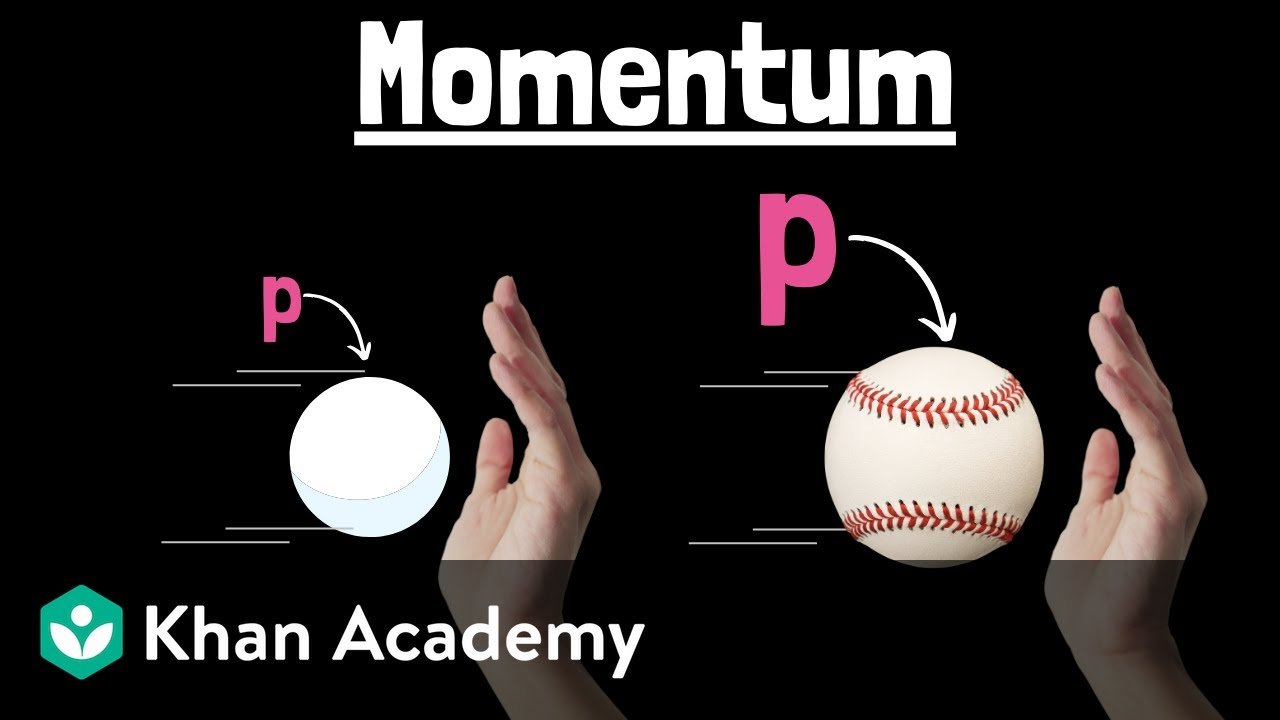
Units of Momentum: SI, CGS, US Customary, and Particle Physics Units With Conversions
The SI unit of momentum is the kilogram meter per second (kg·m/s), which equals the newton second (N·s). The CGS unit is the gram centimeter per second (g·cm/s). Particle physics uses eV/c. This guide covers 4 unit systems, the dimensional formula, conversion factors, and 6 worked examples.
For a related explanation, see Net Force Definition.
What Is the Unit of Momentum?
The SI unit of momentum is the kilogram meter per second (kg·m/s). Momentum is the product of mass and velocity, p = mv. Examples include a 1,400 kg car at 15 m/s with a momentum of 21,000 kg·m/s and a 110 kg football player at 8.00 m/s with a momentum of 880 kg·m/s. According to OpenStax, momentum is a vector quantity, so it has a direction in addition to a magnitude.
Does Momentum Have a Special Unit Name?
No, momentum has no special unit name in the SI. NIST lists 22 SI derived units with special names, such as the newton, joule, and pascal, and none of them is a unit of linear momentum. Momentum uses the base-unit combination kg·m/s.
What Is the Dimensional Formula of Momentum?
The dimensional formula of momentum is MLT⁻¹, where M is mass, L is length, and T is time. Mass has dimension M, and velocity has dimension LT⁻¹, so their product has dimension MLT⁻¹.
Is the Unit of Momentum kg·m/s the Same as N·s?
Yes, 1 N·s equals 1 kg·m/s. According to NIST, 1 newton is the force that gives a 1 kilogram mass an acceleration of 1 meter per second squared, so 1 N = 1 kg·m/s². Multiplying by 1 second gives 1 N·s = 1 kg·m/s. OpenStax states that the impulse applied to a system equals the change in momentum, J = Δp, so impulse and momentum share one unit. The table below compares 5 quantities with their formulas, SI units, and base units.
| Quantity | Formula | SI Unit | Base Units |
|---|---|---|---|
| Momentum | p = mv | kg·m/s | kg·m/s |
| Impulse | J = FΔt | N·s | kg·m/s |
| Force | F = ma | N | kg·m/s² |
| Angular momentum | L = r × p | kg·m²/s | kg·m²/s |
| Kinetic energy | K = ½mv² | J | kg·m²/s² |
What Are the Units of Momentum in Other Unit Systems?
Four unit systems define momentum units: SI, CGS, US customary, and particle physics. The table below lists 5 momentum units with the mass unit, the velocity unit, and the value in kg·m/s.
| Unit System | Mass Unit | Velocity Unit | Momentum Unit | Value in kg·m/s |
|---|---|---|---|---|
| SI | kilogram (kg) | meter per second (m/s) | kg·m/s | 1 |
| CGS | gram (g) | centimeter per second (cm/s) | g·cm/s | 1 × 10⁻⁵ |
| US customary (slug) | slug | foot per second (ft/s) | slug·ft/s, equal to lbf·s | 4.4482 |
| US customary (pound-mass) | pound-mass (lb) | foot per second (ft/s) | lb·ft/s | 0.1383 |
| Particle physics | not applicable | not applicable | eV/c | 5.344 286 × 10⁻²⁸ |
The slug and pound-mass values use the NIST factors 1 slug = 14.5939 kg, 1 lb = 0.4535924 kg, and 1 ft = 0.3048 m.
What Does eV/c Mean as a Unit of Momentum?
The unit eV/c is the electron-volt divided by the speed of light, and particle physics uses it for momentum. One eV/c equals 5.344 286 × 10⁻²⁸ kg·m/s. The conversion uses 1 eV = 1.602 176 634 × 10⁻¹⁹ J and c = 299 792 458 m/s, which are both exact values in the Particle Data Group constants table. The prefixes keV/c, MeV/c, and GeV/c multiply the unit by 10³, 10⁶, and 10⁹.
How Do You Convert Units of Momentum?
Convert units of momentum by converting the mass to kilograms and the velocity to meters per second, then multiplying. The conversion takes 4 steps:
- Convert the mass to kilograms (divide grams by 1,000).
- Convert the velocity to meters per second (divide km/h by 3.6, and multiply cm/s by 10⁻²).
- Multiply the mass by the velocity.
- Report the result in kg·m/s with its direction.
The table below lists the factors that convert 7 momentum units to kg·m/s.
| From | Multiply by | Result Unit |
|---|---|---|
| N·s | 1 | kg·m/s |
| g·cm/s | 1 × 10⁻⁵ | kg·m/s |
| lb·ft/s | 0.1383 | kg·m/s |
| slug·ft/s or lbf·s | 4.4482 | kg·m/s |
| keV/c | 5.344 286 × 10⁻²⁵ | kg·m/s |
| MeV/c | 5.344 286 × 10⁻²² | kg·m/s |
| GeV/c | 5.344 286 × 10⁻¹⁹ | kg·m/s |
What Are Worked Examples of Momentum Unit Conversions?
Six worked examples apply the units to SI, CGS, km/h, pound-mass, impulse, and relativistic cases. The table below lists the given values, the calculation, and the result of each example.
| Example | Given | Calculation | Result |
|---|---|---|---|
| 1. Baseball in SI units | m = 150 g, v = 40.0 m/s | p = (0.150 kg)(40.0 m/s) | 6.00 kg·m/s |
| 2. Baseball in CGS units | m = 150 g, v = 4,000 cm/s | p = (150 g)(4,000 cm/s) = 6.00 × 10⁵ g·cm/s, then × 10⁻⁵ | 6.00 kg·m/s |
| 3. Car in km/h | m = 1,000 kg, v = 72 km/h | v = 72 ÷ 3.6 = 20 m/s, then p = (1,000 kg)(20 m/s) | 2.0 × 10⁴ kg·m/s |
| 4. Ball in pound-mass | m = 2.00 lb, v = 30.0 ft/s | p = (2.00 lb)(30.0 ft/s) = 60.0 lb·ft/s, then × 0.1383 | 8.30 kg·m/s |
| 5. Impulse of a racquet | F = 660 N, Δt = 5.0 ms | J = (660 N)(5.0 × 10⁻³ s) | 3.3 N·s = 3.3 kg·m/s |
| 6. Relativistic electron | m = 9.109 383 7015 × 10⁻³¹ kg, u = 0.985c | p = γmu with γ = 5.795 | 1.56 × 10⁻²¹ kg·m/s = 2.92 MeV/c |
Example 5 follows an OpenStax tennis problem, where a 0.057 kg ball leaves a racquet at 58 m/s after 5.0 ms of contact. OpenStax reports a momentum change of about 3.3 kg·m/s and an average force of about 660 N. Example 6 uses the relativistic momentum p = γmu from OpenStax University Physics Volume 3, with γ = 1/√(1 − u²/c²).
What Is the Unit of Angular Momentum?
The SI unit of angular momentum is the kilogram meter squared per second (kg·m²/s), which equals the joule second (J·s). OpenStax defines the angular momentum of a particle as the cross product of position and linear momentum, l = r × p, so its unit is a length unit multiplied by a linear momentum unit. In an OpenStax worked example, a 15.0 kg meteor has an angular momentum of 7.50 × 10⁸ kg·m²/s about an observer.
What Mistakes Do Students Make With Units of Momentum?
Five mistakes cause unit errors in momentum problems:
- Using grams, centimeters per second, or kilometers per hour without converting to kilograms and meters per second
- Writing impulse as N/s instead of N·s
- Writing joules (J) as the unit of momentum
- Dropping the direction of momentum
- Confusing momentum with impulse
Çirkinoğlu Şekercioğlu and Kocakülah (2008) surveyed 139 grade 10 students in Turkey and published the results in the Journal of Turkish Science Education. The study found that 30% of students confused momentum with impulse. The study also found that 24% used energy, power, force, or acceleration in place of momentum, and that 68% were unaware that momentum is a vector.
What Are People Also Asking About Units of Momentum?
What is the SI unit of momentum?
The SI unit of momentum is the kilogram meter per second (kg·m/s).
Is the unit of momentum N·s or kg·m/s?
Both units are equal, because 1 N·s = 1 kg·m/s.
What is the CGS unit of momentum?
The CGS unit of momentum is the gram centimeter per second (g·cm/s), which equals 1 × 10⁻⁵ kg·m/s.
What is the unit of impulse?
The unit of impulse is the newton second (N·s).
What is the dimensional formula of momentum?
The dimensional formula of momentum is MLT⁻¹.
Is momentum a scalar or a vector?
Momentum is a vector quantity with magnitude and direction.
What is the unit of angular momentum?
The unit of angular momentum is the kilogram meter squared per second (kg·m²/s).
Why Do Units of Momentum Matter in Physics?
Units of momentum matter because consistent units give valid momentum values, impulse values, and conservation results. The SI unit kg·m/s equals N·s, and the CGS, US customary, and eV/c units convert to kg·m/s with fixed factors. The dimensional formula MLT⁻¹ confirms that mass times velocity produces momentum in every unit system.
Title tag: SI Unit for Electric Potential: Volt and 5 Equivalent Forms
Meta description: The SI unit for electric potential is the volt (V), equal to 1 J/C. See 5 equivalent forms, base units, prefixes, formulas, and 5 worked examples.
For the official reference, consult OpenStax University Physics Linear Momentum.

The University of the West Indies
My passion as a teacher and leader in education is to contribute to students’ enhanced learning by creation of a positive teaching/learning environment, where they are motivated to develop strong critical thinking, analytical and problem-solving skills.
As acting Vice-Principal and head of Physics, I have amassed five years of experience in leading meetings, implementing strategies to maintain discipline and school ethos, liaise with stakeholders in planning for future development of the institution; successfully negotiated the implementation of various projects for student development as well as supervising effective execution of such. For the past 19 years, I have incorporated discovery learning within the classroom through practical activities, problem solving and cooperative learning and have realized that students retention in Physics and Mathematics have increased significantly.
I am always cognizant that students have different learning styles, and as such teaching strategies during planning and delivery must take this crucial factor into consideration and be tailored to meet such differences.