

What Is the Final Velocity Equation? Formulas, 5 Steps, and 6 Solved Examples
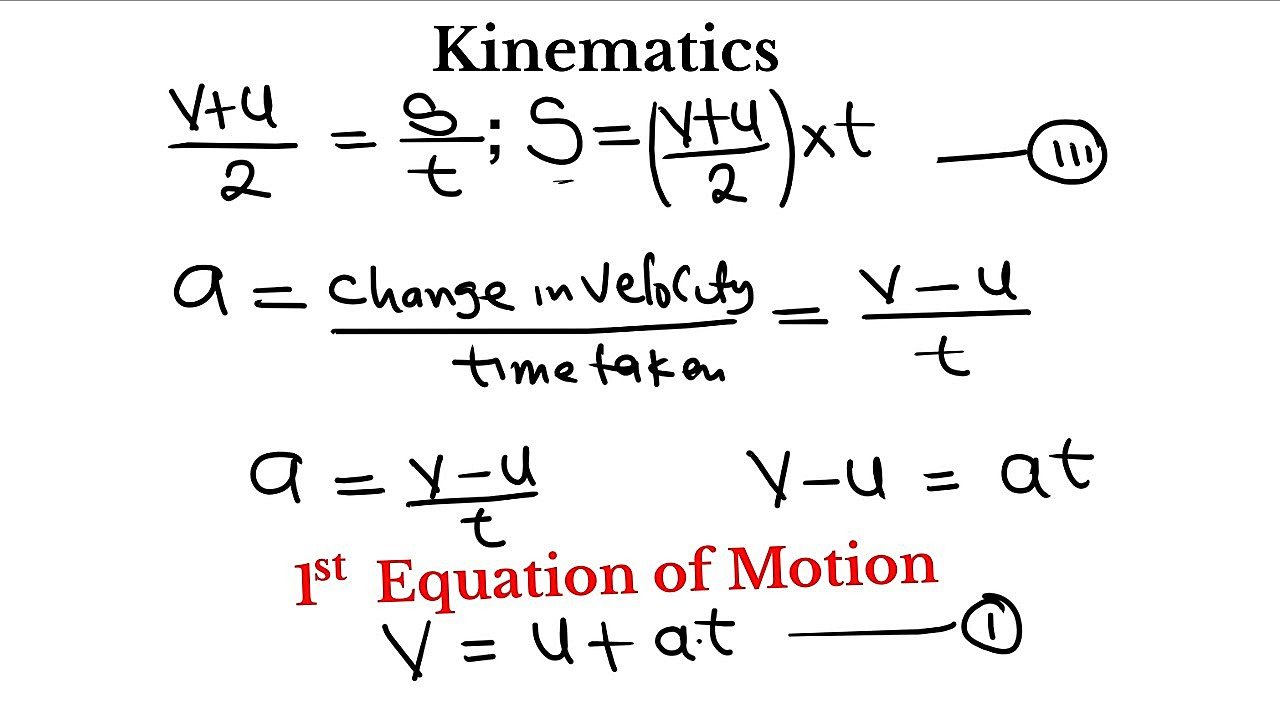
The final velocity equation is v_f = v_i + at. In the equation, v_f is final velocity, v_i is initial velocity, a is acceleration, and t is time. The equation applies to motion with constant acceleration.
For a reliable reference, consult OpenStax section on velocity and speed.
What Is Final Velocity?
Final velocity is the velocity of an object at the end of a time interval. Final velocity is a vector quantity with magnitude and direction. Examples of final velocity include a car reaching 25 m/s after accelerating, a ball striking the ground at 14 m/s, and 2 carts moving together after a collision.
Table 1 defines the 5 variables in the final velocity equations and their alternative symbols.
| Symbol | Quantity | SI unit | Alternative symbols |
|---|---|---|---|
| v_f | Final velocity | m/s | v |
| v_i | Initial velocity | m/s | v0, u |
| a | Acceleration | m/s² | a |
| t | Time interval | s | Δt |
| Δx | Displacement | m | s, d, x − x0 |
What Is the Unit of Final Velocity?
The SI unit of final velocity is the meter per second (m/s).
What Is the Difference Between Final Velocity and Average Velocity?
Final velocity is the velocity at the end of the interval, and average velocity is displacement divided by time. When acceleration is constant, the average velocity equals the simple average of the initial and final velocities. The formula is v_avg = (v_i + v_f) / 2.
What Is the Final Velocity Equation?
The final velocity equation is v_f = v_i + at. OpenStax lists this equation as the velocity from acceleration, with the condition of constant acceleration. Final velocity depends on how large the acceleration is and how long it lasts. Final velocity equals initial velocity, if the acceleration is zero.
When Does the Final Velocity Equation Apply?
The final velocity equation applies when acceleration is constant. OpenStax develops the equations under the assumption that acceleration is constant. Constant acceleration arises only in special cases, such as a charged particle between parallel plates or a fall that is short compared to the size of the gravitating body.
The equation for variable acceleration is v_f = v_i + ∫a(t) dt. OpenStax gives the velocity from a time-dependent acceleration as the integral of the acceleration plus a constant.
How Is the Final Velocity Equation Derived?
The final velocity equation derives from the definition of average acceleration. OpenStax defines average acceleration as the change in velocity divided by the change in time. The 3 derivation steps are:
- Start with the definition of acceleration: a = (v_f − v_i) / t.
- Multiply both sides by t: at = v_f − v_i.
- Add v_i to both sides: v_f = v_i + at.
What Are the 8 Final Velocity Equations?
The 8 final velocity equations depend on the known quantities: time, displacement, force, work, collision data, fall height, or exhaust velocity. Table 2 lists each equation with its known quantities and condition.
| Known quantities | Equation | Condition |
|---|---|---|
| Initial velocity, acceleration, time | v_f = v_i + at | Constant acceleration |
| Initial velocity, acceleration, displacement | v_f = ±√(v_i² + 2aΔx) | Constant acceleration; the sign follows the direction of motion |
| Initial velocity, displacement, time | v_f = 2Δx / t − v_i | Constant acceleration |
| Initial velocity, net force, time, mass | v_f = v_i + FΔt / m | Constant net force and constant mass |
| Initial velocity, net work, mass | v_f = ±√(v_i² + 2W / m) | W is the net work done on the object |
| Masses and initial velocities of 2 objects | v_f = (m1v1 + m2v2) / (m1 + m2) | Perfectly inelastic collision |
| Fall height | v_f = √(2gh) | Free fall from rest, no air resistance |
| Initial velocity, exhaust velocity, masses | v_f = v_i + v_e ln(M0 / M) | Ideal rocket with no external forces |
OpenStax lists the equation v² = v0² + 2a(x − x0) for velocity from distance under constant acceleration.
What Are the 5 Steps to Calculate Final Velocity?
Calculate final velocity by listing the known quantities, choosing the equation that contains the unknown, converting to SI units, substituting the values, and stating the result with a unit and direction. The 5 steps are:
- List the known quantities and the unknown final velocity.
- Choose the equation that contains the unknown and the known quantities.
- Convert all values to SI units.
- Substitute the values into the equation.
- State the final velocity with a unit and a direction.
A car with v_i = 10 m/s and a = 2 m/s² for t = 5 s has v_f = 10 + (2 × 5) = 20 m/s.
How Do Signs Affect Final Velocity?
Choose a positive direction, and assign negative values to quantities that point the opposite way. Deceleration is negative acceleration along the direction of motion. A car with v_i = 20 m/s and a = −4 m/s² for 3 s has v_f = 20 + (−4 × 3) = 8 m/s. OpenStax includes a worked example of an airplane slowing down after landing.
What Are 6 Solved Examples of the Final Velocity Equation?
Table 3 lists 6 solved examples with the equation, given values, and final velocity.
| Example | Equation | Given values | Final velocity |
|---|---|---|---|
| Car speeding up | v_f = v_i + at | v_i = 10 m/s; a = 2 m/s²; t = 5 s | 20 m/s |
| Car braking | v_f = v_i + at | v_i = 20 m/s; a = −4 m/s²; t = 3 s | 8 m/s |
| Sprinter over a distance | v_f = √(v_i² + 2aΔx) | v_i = 0 m/s; a = 4 m/s²; Δx = 18 m | 12 m/s |
| Ball dropped from a height | v_f = √(2gh) | h = 20 m; g = 9.8 m/s² | 19.8 m/s |
| Cart pushed by a constant force | v_f = v_i + FΔt / m | v_i = 2 m/s; F = 30 N; Δt = 4 s; m = 15 kg | 10 m/s |
| Perfectly inelastic collision | v_f = (m1v1 + m2v2) / (m1 + m2) | m1 = 1,000 kg; v1 = 15 m/s; m2 = 500 kg; v2 = 0 m/s | 10 m/s |
How Do You Find Final Velocity in Free Fall?
The final velocity in free fall is v_f = v_i − gt, with upward as the positive direction. OpenStax lists the free-fall velocity as v = v0 − gt and the height form as v² = v0² − 2g(y − y0). The magnitude of g is 9.8 m/s².
An object dropped from rest for 3 s has v_f = 9.8 × 3 = 29.4 m/s downward.
How Do You Find Final Velocity After a Collision?
Final velocity after a collision follows from conservation of momentum. Conservation of momentum must hold, so the velocities after the collision are not fully determined by the velocities before the collision alone.
What Is the Final Velocity in a Perfectly Inelastic Collision?
The final velocity in a perfectly inelastic collision is v_f = (m1v1 + m2v2) / (m1 + m2). The 2 masses stick together and share 1 final velocity. The final velocity is a weighted average of the initial velocities, with the masses as weights.
What Are the Final Velocities in an Elastic Collision?
The final velocities in an elastic collision conserve both momentum and kinetic energy. The solutions for a head-on elastic collision are v1f = ((m1 − m2) / (m1 + m2)) v1i + (2m2 / (m1 + m2)) v2i and v2f = (2m1 / (m1 + m2)) v1i + ((m2 − m1) / (m1 + m2)) v2i.
A 2 kg object at 3 m/s that strikes a 1 kg object at rest gives v1f = 1 m/s and v2f = 4 m/s.
How Do You Find the Final Velocity of a Rocket?
The final velocity of a rocket is v_f = v_i + v_e ln(M0 / M), where v_e is the exhaust velocity, M0 is the initial mass, and M is the final mass. This relationship is the Tsiolkovsky rocket equation, written as Δv = v_e ln(M0 / M).
A rocket with v_e = 3,000 m/s and M0 / M = 4 gains Δv = 3,000 × ln 4 = 4,159 m/s. The logarithm means that small increases in rocket velocity require large amounts of initial fuel.
What Are 4 Common Mistakes With the Final Velocity Equation?
The 4 common mistakes are applying the equation to variable acceleration, ignoring signs, mixing units, and choosing the wrong root.
A study of 467 engineering students found that students confuse physical concepts in kinematics with mathematical functions and use rote-learning strategies without understanding their physical meaning. Introductory courses often limit motion problems to constant acceleration.
Table 4 pairs each mistake with the correct method.
| Mistake | Correct method |
|---|---|
| Applying v_f = v_i + at when acceleration changes | Integrate the acceleration over time: v_f = v_i + ∫a(t) dt |
| Ignoring the signs of velocity and acceleration | Choose a positive direction and keep the signs in every term |
| Mixing units, such as km/h with m/s² | Convert all values to SI units before substituting |
| Taking the positive root of v_f = ±√(v_i² + 2aΔx) in every case | Select the root that matches the direction of motion |
People Also Ask About the Final Velocity Equation
What is the formula for final velocity?
The formula for final velocity is v_f = v_i + at.
What is the final velocity formula without time?
The formula without time is v_f² = v_i² + 2aΔx.
What is the final velocity formula without acceleration?
The formula without acceleration is v_f = 2Δx / t − v_i.
What is the final velocity of a dropped object?
The final velocity of an object dropped from rest is v_f = gt, or v_f = √(2gh) from a height h.
What is the final velocity at the top of a projectile's path?
The vertical component of final velocity is 0 m/s at the top of the path, and the horizontal component stays constant, if air resistance is negligible.
What is the difference between v_f and v_i?
The symbol v_f is the velocity at the end of the interval, and v_i is the velocity at the start of the interval.
Can final velocity be negative?
Yes, final velocity is negative, if it points opposite to the chosen positive direction.
What Is the Final Velocity Equation? Summary of 5 Key Facts
The 5 key facts about the final velocity equation are:
- The final velocity equation is v_f = v_i + at.
- The equation applies to motion with constant acceleration.
- The equation v_f² = v_i² + 2aΔx gives final velocity without time.
- Conservation of momentum gives final velocity after collisions.
- Correct signs and SI units produce the correct final velocity.
Title tag: Electric Force Definition: Formula, Units, and 6 Examples

The University of the West Indies
My passion as a teacher and leader in education is to contribute to students’ enhanced learning by creation of a positive teaching/learning environment, where they are motivated to develop strong critical thinking, analytical and problem-solving skills.
As acting Vice-Principal and head of Physics, I have amassed five years of experience in leading meetings, implementing strategies to maintain discipline and school ethos, liaise with stakeholders in planning for future development of the institution; successfully negotiated the implementation of various projects for student development as well as supervising effective execution of such. For the past 19 years, I have incorporated discovery learning within the classroom through practical activities, problem solving and cooperative learning and have realized that students retention in Physics and Mathematics have increased significantly.
I am always cognizant that students have different learning styles, and as such teaching strategies during planning and delivery must take this crucial factor into consideration and be tailored to meet such differences.