

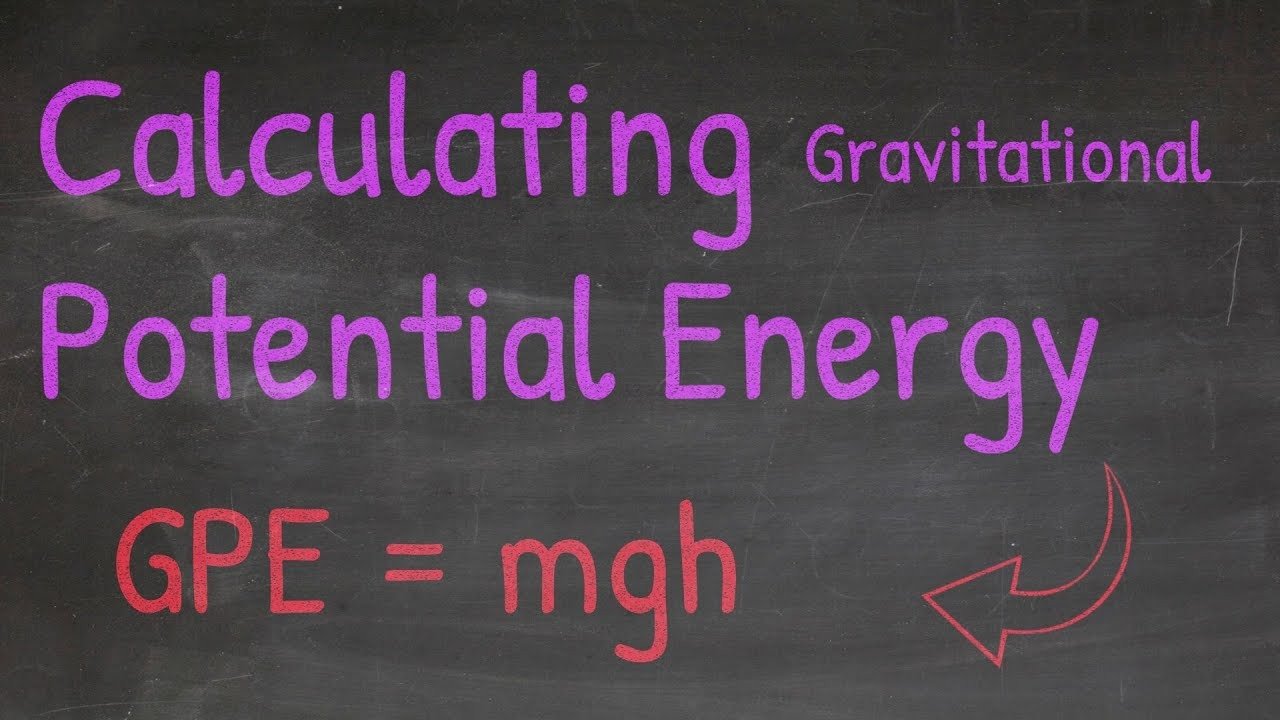
What Is the Definition of Gravitational Potential Energy, and Which Formula, Units, and Examples Describe It?
Gravitational potential energy is the energy stored in an object because of its position in a gravitational field. Near Earth’s surface, the formula is U_g = mgh, where m is mass, g is gravitational acceleration, and h is height above a reference level. The general formula is U_g = −GMm/r. The SI unit is the joule (J). Gravitational potential energy converts to kinetic energy when an object falls.
For a reliable reference, see OpenStax covers gravitational potential energy near Earth and universal gravitation.
For an application where gravitational potential energy changes during a flight, see Projectile Motion: 6 Equations, 2 Types, and 3 Solved Problems.
What Is the Definition of Gravitational Potential Energy?
Gravitational potential energy is the energy that an object has because of its position in a gravitational field. The symbols are U_g, U, and PE_g. The SI unit is the joule (J).
According to OpenStax University Physics Volume 1, the work done by gravity depends only on the change in height. This property allows a potential energy function for gravity. The energy belongs to the system of the object and the attracting body, such as an apple and Earth.
Gravitational potential energy equals the work that an outside force performs against gravity to move the object to its position, with no change in kinetic energy.
What Is the Formula for Gravitational Potential Energy?
The formula near Earth’s surface is U_g = mgh, and the general formula for any separation is U_g = −GMm/r.
The table lists 10 related formulas and the use case of each formula.
| Quantity | Formula | Use Case |
|---|---|---|
| Near Earth’s surface | U_g = mgh | Height much smaller than Earth’s radius, constant g |
| Change in height | ΔU_g = mgΔh = mg(h₂ − h₁) | Energy change between 2 heights |
| General two-body energy | U_g = −Gm₁m₂/r | Any separation, zero at infinite distance |
| Change between radii | ΔU = GMm(1/r₁ − 1/r₂) | Large height changes |
| Work done by gravity | W_gravity = −ΔU_g | Link between work and energy |
| Force from energy | F = −dU/dr | Gravitational force from the energy function |
| Gravitational potential | V = U_g/m = −GM/r | Energy per unit mass, in J/kg |
| Energy conservation | K₁ + U₁ = K₂ + U₂ | No friction or drag |
| Total energy of a circular orbit | E = −GMm/(2r) | Satellites and planets |
| Escape speed | v_esc = √(2GM/r) | Speed that gives zero total energy |
What Do the Symbols in the Formula Mean?
The table defines each quantity and gives its SI unit and typical value.
| Quantity | Symbol | SI Unit | Definition and Value |
|---|---|---|---|
| Gravitational potential energy | U_g | joule (J) | Energy stored by position |
| Mass | m | kilogram (kg) | Mass of the object |
| Gravitational acceleration | g | meter per second squared (m/s²) | 9.81 m/s² near Earth’s surface |
| Height | h | meter (m) | Vertical distance above the reference level |
| Gravitational constant | G | N·m²/kg² | 6.674 × 10⁻¹¹ N·m²/kg² |
| Mass of the attracting body | M | kilogram (kg) | Earth: 5.972 × 10²⁴ kg |
| Distance from the center | r | meter (m) | Earth’s mean radius: 6.371 × 10⁶ m |
Standard gravity is defined as 9.80665 m/s². This article uses 9.81 m/s².
What Is the SI Unit of Gravitational Potential Energy?
The SI unit of gravitational potential energy is the joule (J), equal to 1 kg·m²/s². One joule equals the energy needed to lift a 0.102 kg object by 1 m near Earth’s surface.
The table converts 6 energy units to joules.
| Unit | Symbol | Value in Joules |
|---|---|---|
| Joule | J | 1 |
| Kilojoule | kJ | 1,000 |
| Calorie (thermochemical) | cal | 4.184 |
| Foot-pound | ft·lbf | 1.356 |
| Kilowatt-hour | kWh | 3.6 × 10⁶ |
| Electronvolt | eV | 1.602 × 10⁻¹⁹ |
What Does the Reference Level Mean in Gravitational Potential Energy?
The reference level is the height where U_g is defined as 0 J, and only differences in U_g have physical meaning. A reference level at the floor, a table, or the ground are common choices.
The table lists the energy of a 5.0 kg book on a shelf 2.0 m above the floor, for 3 reference levels.
| Reference Level | Height Above Reference (m) | U_g (J) |
|---|---|---|
| Floor | 2.00 | 98.1 |
| Table top at 0.75 m | 1.25 | 61.3 |
| Shelf | 0.00 | 0 |
The change in energy from the shelf to the floor equals −98.1 J for every choice of reference level.
Can Gravitational Potential Energy Be Negative?
Yes, gravitational potential energy is negative below the reference level, and the general formula U_g = −GMm/r is negative at every finite distance. The negative sign indicates that external work is needed to move the object to infinite separation, where U_g equals 0 J.
How Is Gravitational Potential Energy Derived?
The formula derives from the work needed to lift an object against gravity, in 5 steps.
- Lift the object at constant speed, so the applied force equals the weight, F = mg.
- Calculate the work over a height h: W = Fh = mgh.
- Note that kinetic energy does not change, so the work is stored as potential energy.
- Assign U_g = 0 at the reference level, which gives U_g = mgh.
- Integrate the general force F = GMm/r² from r₁ to r₂, which gives ΔU = GMm(1/r₁ − 1/r₂), and set U = 0 at infinity to obtain U = −GMm/r.
Gravity is a conservative force. The work depends only on the start and end points, and the work around a closed path equals 0 J.
When Does U = mgh Hold?
The formula U = mgh holds when the height change is much smaller than Earth’s radius, since g then stays nearly constant. The relative error of mgh equals about h/R, where R is 6.371 × 10⁶ m.
The table lists the error of mgh for 5 heights.
| Height h | Relative Error (h/R) | Comment |
|---|---|---|
| 100 m | 0.0016% | Building or tower |
| 1,000 m | 0.016% | Mountain |
| 10,000 m | 0.16% | Airliner altitude |
| 100,000 m | 1.6% | Edge of space |
| 400,000 m | 6.3% | International Space Station altitude |
How Do You Calculate Gravitational Potential Energy?
Calculate gravitational potential energy in 4 steps: choose, measure, substitute, and state.
- Choose the reference level where U_g equals 0 J.
- Measure the mass in kilograms and the height in meters above the reference level.
- Substitute the values into U_g = mgh, with g = 9.81 m/s².
- State the result in joules.
Worked Example 1: How to Calculate the Energy of a Book on a Shelf?
A 2.0 kg book sits 1.5 m above the floor.
- Formula: U_g = mgh
- Substitution: U_g = 2.0 × 9.81 × 1.5
- Result: U_g = 29.4 J
Worked Example 2: How to Calculate the Energy Gained by a Climber?
A 60 kg climber ascends 500 m.
- Formula: ΔU_g = mgΔh
- Substitution: ΔU_g = 60 × 9.81 × 500
- Result: ΔU_g = 294,300 J, which equals 294 kJ
Worked Example 3: How to Calculate Height From Energy?
A 5.0 kg object has U_g = 98.1 J.
- Formula: h = U_g/(mg)
- Substitution: h = 98.1/(5.0 × 9.81)
- Result: h = 2.0 m
Worked Example 4: How to Calculate Mass From Energy?
An object at a height of 4.0 m has U_g = 196.2 J.
- Formula: m = U_g/(gh)
- Substitution: m = 196.2/(9.81 × 4.0)
- Result: m = 5.0 kg
Worked Example 5: How to Calculate the Speed After a Fall?
An object falls from rest through 20 m, with no air resistance.
- Energy conservation: mgh = ½mv²
- Formula: v = √(2gh)
- Substitution: v = √(2 × 9.81 × 20)
- Result: v = 19.8 m/s
Mass cancels, so every object falls with the same speed in a vacuum.
Worked Example 6: How to Calculate Energy on an Incline?
A 3.0 kg block slides from rest down a frictionless incline of 5.0 m length at 30 degrees.
- Height drop: h = 5.0 × sin 30° = 2.5 m
- Energy released: ΔU_g = 3.0 × 9.81 × 2.5 = 73.6 J
- Speed at the bottom: v = √(2 × 9.81 × 2.5) = 7.0 m/s
The path length does not change the energy. Only the vertical height drop counts.
Worked Example 7: How to Calculate Energy in a Pendulum?
A 0.50 kg bob hangs from a 1.0 m string and is released from 60 degrees.
- Height gain: h = L(1 − cos 60°) = 1.0 × 0.50 = 0.50 m
- Energy at release: U_g = 0.50 × 9.81 × 0.50 = 2.45 J
- Speed at the lowest point: v = √(2 × 9.81 × 0.50) = 3.13 m/s
Worked Example 8: How to Calculate Energy on a Roller Coaster?
A 500 kg car starts from rest at a height of 40 m, with no friction.
- Energy at the top: U_g = 500 × 9.81 × 40 = 196,200 J
- Speed at the bottom: v = √(2 × 9.81 × 40) = 28.0 m/s
- Speed at a height of 15 m: v = √(2 × 9.81 × 25) = 22.1 m/s
Worked Example 9: How to Calculate the Energy of Water Behind a Dam?
A mass of 1.0 × 10⁶ kg of water (1,000 m³) falls through a head of 50 m.
- Energy: U_g = 1.0 × 10⁶ × 9.81 × 50 = 4.905 × 10⁸ J
- Conversion: 4.905 × 10⁸/3.6 × 10⁶ = 136 kWh
- Output at 90% turbine efficiency: 136 × 0.90 = 123 kWh
Worked Example 10: How to Calculate Gravitational Potential Energy of a Satellite?
A 1,000 kg satellite orbits at r = 6.771 × 10⁶ m. For Earth, GM = 3.986 × 10¹⁴ m³/s².
- Energy in orbit: U = −GMm/r = −(3.986 × 10¹⁷)/(6.771 × 10⁶) = −5.89 × 10¹⁰ J
- Energy at the surface (r = 6.371 × 10⁶ m): U = −6.26 × 10¹⁰ J
- Energy gain from the surface to orbit: 3.70 × 10⁹ J
- Result from mgh with h = 400 km: 3.92 × 10⁹ J, which is about 6% above the exact value
Worked Example 11: How to Calculate Escape Speed From Earth?
- Formula: v_esc = √(2GM/R)
- Substitution: v_esc = √(2 × 3.986 × 10¹⁴/6.371 × 10⁶)
- Result: v_esc = 11,186 m/s, which equals 11.2 km/s
How Does Gravitational Potential Energy Convert to Kinetic Energy?
A falling object loses gravitational potential energy and gains an equal amount of kinetic energy when no friction or drag acts. The sum K + U_g stays constant.
The table lists the energy of a 1.0 kg ball dropped from 10 m at 5 heights.
| Height (m) | Potential Energy (J) | Kinetic Energy (J) | Total (J) | Speed (m/s) |
|---|---|---|---|---|
| 10.0 | 98.1 | 0 | 98.1 | 0 |
| 7.5 | 73.6 | 24.5 | 98.1 | 7.0 |
| 5.0 | 49.1 | 49.1 | 98.1 | 9.9 |
| 2.5 | 24.5 | 73.6 | 98.1 | 12.1 |
| 0 | 0 | 98.1 | 98.1 | 14.0 |
A ball thrown upward shows the reverse conversion. Kinetic energy decreases, and gravitational potential energy increases, until the ball stops at its highest point.
Does the Path Affect Gravitational Potential Energy?
No, gravitational potential energy depends only on the position, so any path between 2 points gives the same energy change. Gravity is a conservative force.
A 10 kg box lifted 3.0 m straight up gains 294 J. The same box pushed up a frictionless ramp to the same height gains 294 J. A longer ramp lowers the required force, and the energy gain stays the same.
How Does Gravitational Acceleration Change the Energy on Other Planets?
Gravitational potential energy at a given height is proportional to g, so the same lift stores less energy on the Moon and more on Jupiter.
The table lists the energy of a 10 kg object at a height of 10 m for 5 bodies.
| Body | g (m/s²) | U_g = mgh (J) |
|---|---|---|
| Moon | 1.62 | 162 |
| Mars | 3.71 | 371 |
| Venus | 8.87 | 887 |
| Earth | 9.81 | 981 |
| Jupiter (1 bar level) | 24.8 | 2,480 |
What Is the Difference Between Gravitational Potential Energy and Kinetic Energy?
Gravitational potential energy depends on position, and kinetic energy depends on motion.
The table compares the 2 energies across 6 attributes.
| Attribute | Gravitational Potential Energy | Kinetic Energy |
|---|---|---|
| Definition | Energy from position in a gravitational field | Energy from motion |
| Formula | U_g = mgh | K = ½mv² |
| Depends on | Mass, g, height | Mass, speed |
| Sign | Positive, zero, or negative | Zero or positive |
| Reference level | Required | Not required |
| Example | Book on a shelf | Rolling ball |
What Are Other Types of Potential Energy?
Other types of potential energy include elastic, electric, chemical, and nuclear potential energy.
| Type | Source of Energy | Formula | Example |
|---|---|---|---|
| Gravitational | Position in a gravitational field | U_g = mgh | Water behind a dam |
| Elastic | Deformation of a spring | U_s = ½kx² | Compressed spring |
| Electric | Charge position in an electric field | U = kq₁q₂/r | Charged capacitor |
| Chemical | Arrangement of atoms in bonds | Measured per mole | Gasoline |
| Nuclear | Binding of nucleons | E = Δmc² | Uranium nucleus |
What Are Examples of Gravitational Potential Energy?
Examples of gravitational potential energy include a book on a shelf, water behind a dam, a roller coaster car at the top of a hill, a raised hammer, and a satellite in orbit.
The table lists 10 examples with the energy source in each.
| Example | Why the Object Has Gravitational Potential Energy |
|---|---|
| Book on a shelf | Height above the floor |
| Water behind a dam | Height of the reservoir above the turbines |
| Roller coaster car at the top | Height above the lowest track point |
| Pendulum bob at its highest point | Height above the lowest point of the swing |
| Raised hammer of a pile driver | Height above the pile |
| Skydiver in an aircraft | Height above the ground |
| Rock on a cliff | Height above the base |
| Pumped-storage reservoir | Water lifted to a higher basin |
| Elevator at an upper floor | Height above the ground floor |
| Satellite in orbit | Distance from Earth’s center |
How Does Gravitational Potential Energy Relate to Work?
The work done by gravity equals the negative change in gravitational potential energy, W_gravity = −ΔU_g. An object that falls gains energy, and gravity performs positive work.
The table lists the work and energy change for 3 motions of a 2.0 kg object over 3.0 m.
| Motion | Work by Gravity (J) | Change in U_g (J) |
|---|---|---|
| Falls 3.0 m | +58.9 | −58.9 |
| Rises 3.0 m | −58.9 | +58.9 |
| Moves 3.0 m horizontally | 0 | 0 |
What Are the Applications of Gravitational Potential Energy?
Gravitational potential energy applies in 5 fields: hydroelectric power, energy storage, transportation, construction, and spaceflight.
- Hydroelectric power: water falling through a head h releases energy ρVgh, where ρ is water density (1,000 kg/m³) and V is volume. A volume of 1 m³ raised 100 m stores 981 kJ, which equals 0.27 kWh.
- Energy storage: pumped-storage plants pump water uphill when power is cheap and release it through turbines when demand is high. Gravity storage systems with raised weights use the same principle.
- Transportation: elevator counterweights balance the weight of a car, which lowers the net energy needed to lift it.
- Construction: pile drivers and cranes use gravitational potential energy of raised masses to drive or place materials.
- Spaceflight: launch energy depends on the difference in U = −GMm/r between the surface and the target orbit.
What Is the History of Gravitational Potential Energy?
The concept developed from Newton’s law of gravitation in 1687 to the term potential energy in the 19th century.
| Contributor | Year | Contribution |
|---|---|---|
| Isaac Newton | 1687 | Published the law of universal gravitation |
| Thomas Young | 1807 | Introduced the term energy in the modern physical sense |
| James Joule | 1840s | Measured the mechanical equivalent of heat |
| William Rankine | 1853 | Introduced the term potential energy |
What Are Common Misconceptions About Gravitational Potential Energy?
Common misconceptions involve the owner of the energy, the sign, the reference level, and the role of the path.
| Misconception | Correct Statement |
|---|---|
| The energy belongs to the object alone | The energy belongs to the system of the object and the attracting body |
| The energy is always positive | The energy is negative below the reference level and in U = −GMm/r |
| Zero height means zero energy in every sense | Zero is a chosen reference, and only differences matter |
| Longer paths store more energy | Only the height change matters |
| U = mgh holds at any altitude | The formula holds for heights much smaller than Earth’s radius |
| Heavier objects fall faster | The speed after a fall depends on height and g, and mass cancels |
| Gravitational potential energy depends on speed | The energy depends on position and not on motion |
People Also Ask About Gravitational Potential Energy
What is gravitational potential energy in simple terms?
Gravitational potential energy is the energy stored in an object because of its height above a reference level.
What is the formula for gravitational potential energy?
The formula near Earth’s surface is U_g = mgh.
What is the unit of gravitational potential energy?
The unit is the joule (J), equal to 1 kg·m²/s².
What does each symbol in U = mgh mean?
U is energy in joules, m is mass in kilograms, g is 9.81 m/s², and h is height in meters.
Can gravitational potential energy be negative?
Yes, the energy is negative below the reference level and in the general formula U = −GMm/r.
What is the general formula for gravitational potential energy?
The general formula is U = −GMm/r, with zero energy at infinite separation.
Does gravitational potential energy depend on mass?
Yes, the energy is directly proportional to mass.
Does gravitational potential energy depend on the path?
No, only the start and end positions determine the change.
What happens to gravitational potential energy when an object falls?
The energy decreases, and an equal amount converts into kinetic energy without air resistance.
What is an example of gravitational potential energy?
Water in a reservoir above a dam has gravitational potential energy.
What is the difference between gravitational and elastic potential energy?
Gravitational potential energy depends on height, and elastic potential energy depends on the deformation of a spring.
Why is the reference level arbitrary?
Only differences in gravitational potential energy determine physical results, so any zero point gives the same change.
Is gravitational potential energy a scalar or a vector?
Gravitational potential energy is a scalar quantity.
What is gravitational potential energy in one sentence?
Gravitational potential energy is the energy that an object has because of its position in a gravitational field.

The University of the West Indies
My passion as a teacher and leader in education is to contribute to students’ enhanced learning by creation of a positive teaching/learning environment, where they are motivated to develop strong critical thinking, analytical and problem-solving skills.
As acting Vice-Principal and head of Physics, I have amassed five years of experience in leading meetings, implementing strategies to maintain discipline and school ethos, liaise with stakeholders in planning for future development of the institution; successfully negotiated the implementation of various projects for student development as well as supervising effective execution of such. For the past 19 years, I have incorporated discovery learning within the classroom through practical activities, problem solving and cooperative learning and have realized that students retention in Physics and Mathematics have increased significantly.
I am always cognizant that students have different learning styles, and as such teaching strategies during planning and delivery must take this crucial factor into consideration and be tailored to meet such differences.