

What Is the Boltzmann Constant in eV?
The Boltzmann constant in eV is 8.617333262 × 10⁻⁵ eV/K, which rounds to 8.62 × 10⁻⁵ eV/K. NIST lists the constant as 1.380649 × 10⁻²³ J/K, which equals 8.617333262 × 10⁻⁵ eV/K.
For a reliable reference, see NIST CODATA database lists the Boltzmann constant and its standard values.
The AP reference sheet also lists thermal constants; see AP Physics 2 Equation Sheet: 7 Equation Sections, 20 Constants and Conversion Factors, and 9 Exam Conventions Provided by the College Board.
The 3 key facts are:
- Exact SI value: 1.380649 × 10⁻²³ J/K
- Value in electron volts: 8.617333262 × 10⁻⁵ eV/K
- Inverse relationship: 1 eV corresponds to 11,604.518 K
What Is the Boltzmann Constant?
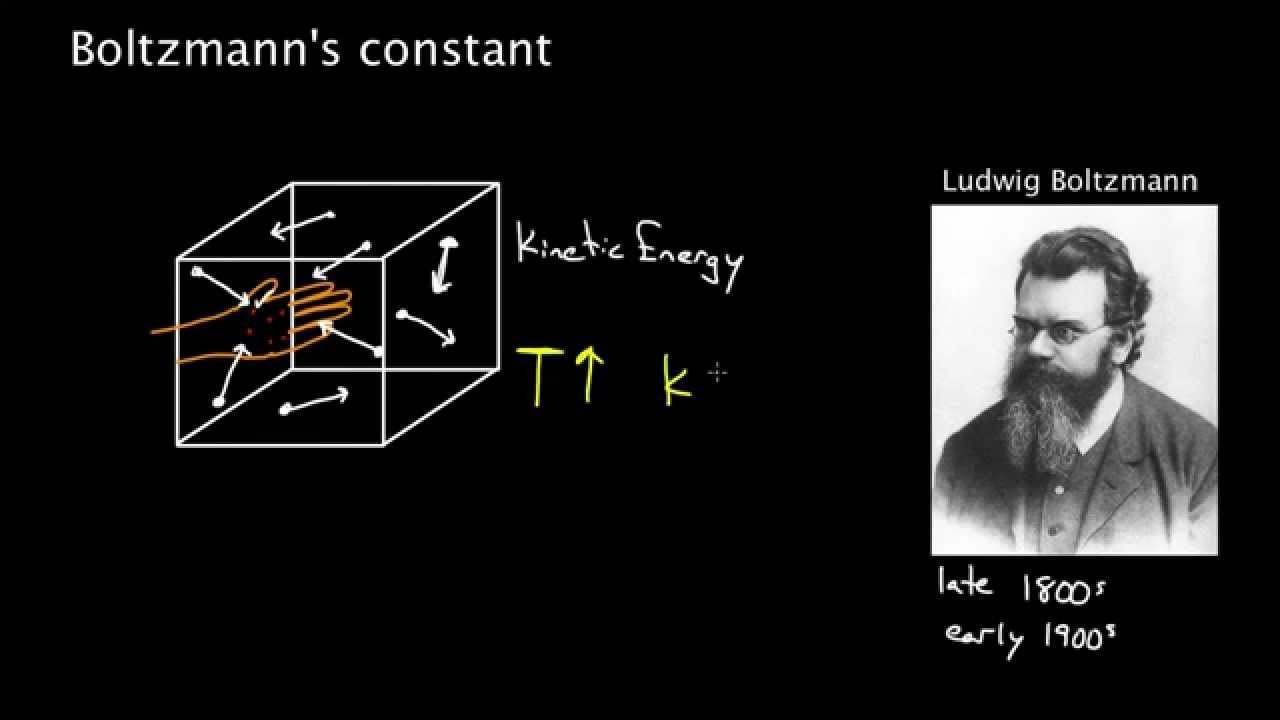
The Boltzmann constant (k or k_B) is the proportionality constant that relates thermal energy to temperature. It has dimensions of energy divided by temperature, the same as entropy and heat capacity. It equals the molar gas constant divided by the Avogadro constant, k = R / N_A. The constant is named after the Austrian scientist Ludwig Boltzmann.
Is the Boltzmann Constant Exact?
Yes, the Boltzmann constant has been exact since 20 May 2019. The new definition of the kelvin came into force on 20 May 2019 and fixes k at exactly 1.380649 × 10⁻²³ J/K. Before 2019, the kelvin was defined as 1/273.16 of the thermodynamic temperature of the triple point of water.
The eV/K value is calculated from exact values, so it is exact to the number of places given. The earlier CODATA 2014 value in eV/K carried an uncertainty: 8.6173303(50) × 10⁻⁵ eV/K.
What Is the Value of the Boltzmann Constant in Different Units?
The Boltzmann constant has 7 common expressions, which Table 1 lists. NIST also gives the value in Hz/K as 2.083661912… × 10¹⁰. The value in inverse meters per kelvin is 69.50348004.
Table 1: Boltzmann Constant in Common Units
| Unit | Symbol | Value |
|---|---|---|
| Joule per kelvin | J/K | 1.380649 × 10⁻²³ (exact) |
| Electron volt per kelvin | eV/K | 8.617333262 × 10⁻⁵ |
| Millielectron volt per kelvin | meV/K | 8.617333262 × 10⁻² |
| Hertz per kelvin | Hz/K | 2.083661912 × 10¹⁰ |
| Inverse meter per kelvin | m⁻¹/K | 69.50348004 |
| Inverse centimeter per kelvin | cm⁻¹/K | 0.6950348004 |
| Joule per mole per kelvin (gas constant R = N_A k_B) | J/(mol·K) | 8.314462618 |
The meV/K and cm⁻¹/K rows are unit rescalings of the NIST values, and the R row is the product of the exact values of N_A and k_B. In kcal, R equals 1.987 × 10⁻³ kcal/(mol·K), using 1 kcal = 4,184 J.
How Do You Convert the Boltzmann Constant From J/K to eV/K?
Divide the Boltzmann constant in J/K by the elementary charge, 1.602176634 × 10⁻¹⁹ J per eV. The electron volt equals exactly 1.602176634 × 10⁻¹⁹ J. The steps are:
- Write the value: k = 1.380649 × 10⁻²³ J/K.
- Write the conversion factor: 1 eV = 1.602176634 × 10⁻¹⁹ J.
- Divide: (1.380649 × 10⁻²³) / (1.602176634 × 10⁻¹⁹) = 8.617333262 × 10⁻⁵.
- State the unit: 8.617333262 × 10⁻⁵ eV/K.
What Are the Rounded Values of the Boltzmann Constant in eV/K?
The common rounded values are 8.62 × 10⁻⁵, 8.617 × 10⁻⁵, and 8.6173 × 10⁻⁵ eV/K. The NIST/SEMATECH reliability handbook uses 8.617 × 10⁻⁵ eV/K. The JEDEC glossary uses 8.62 × 10⁻⁵ eV/K. Table 2 compares each rounded value with the exact value.
Table 2: Rounded Values Compared With the Exact Value
| Rounded Value (eV/K) | Significant Figures | Relative Difference From Exact Value |
|---|---|---|
| 8.62 × 10⁻⁵ | 3 | +0.031% |
| 8.617 × 10⁻⁵ | 4 | −0.0039% |
| 8.6173 × 10⁻⁵ | 5 | −0.00039% |
| 8.617333 × 10⁻⁵ | 7 | −0.0000030% |
How Do You Convert Temperature to Energy in eV?
Multiply the temperature in kelvin by 8.617333262 × 10⁻⁵ eV/K. Each kelvin corresponds to 8.617333262 × 10⁻⁵ eV, which is the ratio of the Boltzmann constant to the elementary charge. The conversion from Celsius uses 0 °C = 273.15 K.
At 300 K, the thermal energy kT equals the reciprocal of 38.68172707 eV, which is about 0.025852 eV. Table 3 lists kT at 7 temperatures.
Table 3: Thermal Energy kT at Common Temperatures
| Temperature (K) | Temperature (°C) | kT (eV) | kT (meV) | Context |
|---|---|---|---|---|
| 77 | −196.15 | 0.006635 | 6.635 | Liquid nitrogen |
| 273.15 | 0 | 0.02354 | 23.54 | Freezing point of water |
| 293.15 | 20 | 0.02526 | 25.26 | Typical room temperature |
| 298.15 | 25 | 0.02569 | 25.69 | Standard conditions |
| 300 | 26.85 | 0.025852 | 25.852 | Semiconductor reference |
| 373.15 | 100 | 0.03216 | 32.16 | Boiling point of water |
| 1,000 | 726.85 | 0.08617 | 86.17 | High-temperature process |
At 20 °C, kT is about 0.025 eV.
How Do You Convert eV to Kelvin?
Divide the energy in eV by 8.617333262 × 10⁻⁵ eV/K, or multiply by 11,604.518 K/eV. NIST lists the relationship as (1 eV)/k = 1.160451812… × 10⁴ K. Temperature can be stated in eV, and 1 eV corresponds to about 11,604 K. Table 4 gives 6 conversions.
Table 4: Energy in eV and Equivalent Temperature
| Energy | Equivalent Temperature (K) | Context |
|---|---|---|
| 0.025852 eV | 300 | Room temperature |
| 0.1 eV | 1,160.45 | Thermally activated defect |
| 1 eV | 11,604.52 | Reference value |
| 1.12 eV | 12,997.06 | Silicon band gap |
| 1 keV | 1.1605 × 10⁷ | Hot plasma |
| 10 keV | 1.1605 × 10⁸ | Fusion plasma |
A magnetic confinement fusion plasma of 15 keV equals 174 MK.
Why Is the Boltzmann Constant Expressed in eV?
The Boltzmann constant is expressed in eV because atomic, semiconductor, and plasma energies are quoted in eV, so E = k_B T returns energy directly in eV. The energy needed to remove an electron from an atom is typically a few to a few dozen eV. The ionization energy of atomic hydrogen is 13.6 eV. The band gap of silicon at 300 K is 1.12 eV.
The Boltzmann constant is assumed whenever the electron volt expresses a temperature.
Which Formulas Use the Boltzmann Constant in eV?
Seven formulas use k_B in eV/K, and each returns an energy in eV when T is in kelvin. Table 5 lists them.
Table 5: Formulas With the Boltzmann Constant in eV/K
| Formula Name | Equation | Use |
|---|---|---|
| Thermal energy | E = k_B T |
Energy scale at temperature T |
| Temperature from energy | T = E / k_B |
Temperature equivalent of an energy |
| Thermal voltage | V_T = k_B T / q |
Diode and transistor voltage scale |
| Boltzmann factor | exp(−E / k_B T) |
Relative probability of an energy state |
| Mean translational kinetic energy | ⟨KE⟩ = (3/2) k_B T |
Average energy of a gas particle |
| Ideal gas law | pV = N k_B T |
Gas pressure, volume, and particle count |
| Arrhenius acceleration factor | AF = exp[(E_a / k_B)(1/T₁ − 1/T₂)] |
Reliability and reaction-rate scaling |
The average translational kinetic energy of a particle equals (3/2)kT, and the Boltzmann distribution gives the probability of energy E as e^(−E/kT) divided by the partition function. The ideal gas law takes the form pV = N k_B T. The thermal voltage is approximately 25.852 mV at 300 K.
Arrhenius activation energies for reliability models typically range from 0.3 or 0.4 eV up to 1.5 eV.
How Is the Boltzmann Constant in eV Used in Worked Examples?
The Boltzmann constant in eV is used by matching the known quantity to a formula in Table 5. The 5 examples below use k_B = 8.617333 × 10⁻⁵ eV/K.
Example 1: What Is the Thermal Energy at 300 K?
- Select the equation: E = k_B T.
- Substitute: E = (8.617333 × 10⁻⁵ eV/K)(300 K).
- Solve: E = 0.025852 eV, or 25.852 meV.
Example 2: What Is the Thermal Voltage at 300 K?
- Select the equation: V_T = k_B T / q.
- Recognize that k_B T in eV equals k_B T / q in volts numerically.
- Solve: V_T = 0.025852 V = 25.852 mV.
Example 3: How Large Is the Silicon Band Gap Compared With kT?
- Write the band gap: E_g = 1.12 eV.
- Calculate the equivalent temperature: T = E_g / k_B = 1.12 / (8.617333 × 10⁻⁵) ≈ 12,997 K.
- Divide by the thermal energy at 300 K: 1.12 eV / 0.025852 eV ≈ 43.3.
Example 4: What Is the Arrhenius Acceleration Factor for 0.7 eV?
A failure mechanism has E_a = 0.7 eV, a use temperature of 55 °C (328.15 K), and a test temperature of 125 °C (398.15 K).
- Select the equation: AF = exp[(E_a / k_B)(1/T_use − 1/T_test)].
- Substitute: AF = exp[(0.7 / 8.617333 × 10⁻⁵)(1/328.15 − 1/398.15)].
- Evaluate the exponent: 8,123.2 × 0.00053577 ≈ 4.352.
- Solve: AF = e^4.352 ≈ 77.6.
Example 5: What Is the Temperature of a 10 keV Plasma?
- Convert the energy: 10 keV = 10,000 eV.
- Select the equation: T = E / k_B.
- Substitute: T = 10,000 eV / (8.617333 × 10⁻⁵ eV/K).
- Solve: T ≈ 1.1605 × 10⁸ K.
What Are People Also Asking About the Boltzmann Constant in eV?
What is the Boltzmann constant in eV?
The Boltzmann constant is 8.617333262 × 10⁻⁵ eV/K.
What is the Boltzmann constant in J/K?
The Boltzmann constant is exactly 1.380649 × 10⁻²³ J/K.
How do you convert the Boltzmann constant from J/K to eV/K?
Divide 1.380649 × 10⁻²³ J/K by 1.602176634 × 10⁻¹⁹ J/eV.
What is kT in eV at room temperature?
The thermal energy kT is 0.025852 eV at 300 K and 0.02526 eV at 293.15 K.
How many kelvin equal 1 eV?
One electron volt corresponds to 1.160451812 × 10⁴ K.
Is the Boltzmann constant a fixed value?
Yes, the Boltzmann constant received an exact fixed value when the kelvin was redefined in 2018 and took effect in 2019.
Why is the Boltzmann constant used in eV for semiconductors?
Band gaps and activation energies are quoted in eV, so multiplying k_B in eV/K by temperature gives energies in the same unit.
What is the difference between the Boltzmann constant and the gas constant?
The Boltzmann constant equals the gas constant divided by the Avogadro constant. The gas constant applies per mole, and the Boltzmann constant applies per particle.
What value of the Boltzmann constant in eV is used in reliability testing?
The JEDEC definition of the Arrhenius reliability equation uses 8.62 × 10⁻⁵ eV/K.
Which Value of the Boltzmann Constant in eV Applies to Each Situation?
The applicable value depends on the required precision and the unit system. Table 6 maps 8 situations to a value.
Table 6: Boltzmann Constant Value by Situation
| Situation | Value to Use | Notes |
|---|---|---|
| SI definition | 1.380649 × 10⁻²³ J/K | Exact |
| High-precision eV calculation | 8.617333262 × 10⁻⁵ eV/K | Exact to the digits given |
| Reliability and semiconductor models | 8.617 × 10⁻⁵ or 8.62 × 10⁻⁵ eV/K | Handbook and JEDEC roundings |
| Quick room-temperature estimate | kT ≈ 0.0259 eV at 300 K | About 1/40 eV |
| Temperature from an energy in eV | 1 eV = 11,604.518 K | Reciprocal of k_B |
| Per-mole energies | 8.314462618 J/(mol·K) | Gas constant R |
| Spectroscopy in wavenumbers | 0.6950348 cm⁻¹/K | k_B / hc |
| Frequency equivalent of temperature | 2.0837 × 10¹⁰ Hz/K | k_B / h |
The Boltzmann constant in eV is 8.617333262 × 10⁻⁵ eV/K, and the value converts temperature to energy in eV by multiplication and energy to temperature by division.
Title: Is Velocity the Same as Speed? 6 Differences and 5 Examples

The University of the West Indies
My passion as a teacher and leader in education is to contribute to students’ enhanced learning by creation of a positive teaching/learning environment, where they are motivated to develop strong critical thinking, analytical and problem-solving skills.
As acting Vice-Principal and head of Physics, I have amassed five years of experience in leading meetings, implementing strategies to maintain discipline and school ethos, liaise with stakeholders in planning for future development of the institution; successfully negotiated the implementation of various projects for student development as well as supervising effective execution of such. For the past 19 years, I have incorporated discovery learning within the classroom through practical activities, problem solving and cooperative learning and have realized that students retention in Physics and Mathematics have increased significantly.
I am always cognizant that students have different learning styles, and as such teaching strategies during planning and delivery must take this crucial factor into consideration and be tailored to meet such differences.