

What Is the Ohm’s Law Wheel? Definition, 12 Formulas, 4 Quantities, and 6 Worked Examples
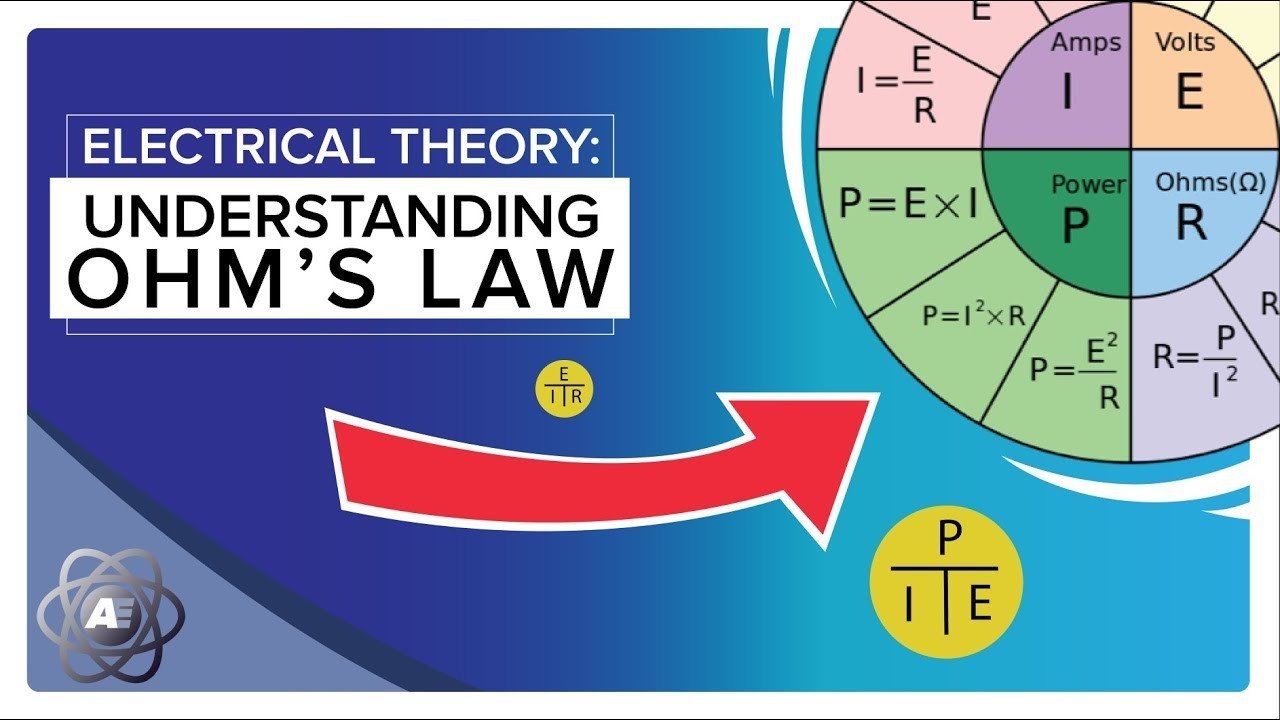
The Ohm’s law wheel is a circular chart that shows 12 formulas for calculating voltage (V), current (I), resistance (R), and power (P) when any 2 of the 4 quantities are known.
For a reliable reference, see OpenStax explains the relationship among voltage, current, and resistance in Ohms law.
For the field relation behind charge behavior, see Electric Field Formula: 9 Equations, Units, and Worked Examples.
What Is the Ohm’s Law Wheel?
The Ohm’s law wheel is a reference diagram that combines Ohm’s law with the electric power formula. The wheel has 4 quadrants, one for each quantity, and each quadrant lists 3 formulas. Other names include the Ohm’s law pie chart, Watt’s law wheel, power wheel, and electrical formula wheel.
OpenStax University Physics Volume 2 defines Ohm’s law as V = IR for ohmic materials, which have a constant resistance. Georg Simon Ohm published the relationship in Die galvanische Kette, mathematisch bearbeitet (1827). The wheel is a teaching aid, and sources do not credit it to a single inventor.
What Are the 4 Quantities on the Ohm’s Law Wheel?
The 4 quantities are voltage, current, resistance, and power. The table below defines each quantity. Each row names one quantity, and the columns give its symbol, SI unit, unit symbol, and definition.
| Quantity | Symbol | SI unit | Unit symbol | Definition |
|---|---|---|---|---|
| Voltage | V (or E) | Volt | V | Energy per unit charge, in joules per coulomb |
| Current | I | Ampere | A | Flow of charge per unit time, in coulombs per second |
| Resistance | R | Ohm | Ω | Opposition to current, in volts per ampere |
| Power | P | Watt | W | Energy transferred per unit time, in joules per second |
According to the BIPM SI Brochure, the ohm is a coherent derived unit equal to 1 V/A. The International Electrical Congress in Paris adopted the ohm as a unit in 1881.
What Are the 12 Formulas on the Ohm’s Law Wheel?
The wheel has 12 formulas because each of the 4 unknown quantities has 3 pairs of known quantities. The table below lists all 12 formulas. Each row names the unknown quantity, the known quantities, and the formula.
| Unknown quantity | Known quantities | Formula |
|---|---|---|
| Voltage (V) | Current and resistance | V = I × R |
| Voltage (V) | Power and current | V = P / I |
| Voltage (V) | Power and resistance | V = √(P × R) |
| Current (I) | Voltage and resistance | I = V / R |
| Current (I) | Power and voltage | I = P / V |
| Current (I) | Power and resistance | I = √(P / R) |
| Resistance (R) | Voltage and current | R = V / I |
| Resistance (R) | Voltage and power | R = V² / P |
| Resistance (R) | Power and current | R = P / I² |
| Power (P) | Voltage and current | P = V × I |
| Power (P) | Current and resistance | P = I² × R |
| Power (P) | Voltage and resistance | P = V² / R |
Where Do the 12 Formulas Come From?
Three base relationships produce all 12 formulas. The base relationships are:
- Ohm’s law: V = I × R
- Electric power: P = V × I
- Joule heating: P = I² × R, described by James Prescott Joule in 1841
Substituting V = I × R into P = V × I gives P = I² × R. Substituting I = V / R into P = V × I gives P = V² / R. Rearranging these equations produces the remaining formulas.
How Do You Read the Ohm’s Law Wheel?
Find the quadrant of the unknown quantity, then choose the formula that uses the 2 known quantities. Use the wheel in 5 steps:
- Identify the 2 known quantities.
- Locate the quadrant of the unknown quantity.
- Select the formula that contains the 2 known quantities.
- Convert all values to base units, such as volts, amperes, ohms, and watts.
- Substitute the values and calculate the result.
What Are 6 Worked Examples of the Ohm’s Law Wheel?
The table below presents 6 examples. Each row gives the unknown quantity, the known values, the formula, and the result.
| Example | Unknown | Known values | Calculation | Result |
|---|---|---|---|---|
| 1 | Current | V = 12 V, R = 4 Ω | I = 12 / 4 | 3 A |
| 2 | Voltage | I = 2 A, R = 10 Ω | V = 2 × 10 | 20 V |
| 3 | Resistance | V = 120 V, P = 60 W | R = 120² / 60 = 14,400 / 60 | 240 Ω |
| 4 | Power | I = 2 A, R = 10 Ω | P = 2² × 10 | 40 W |
| 5 | Voltage | P = 100 W, R = 25 Ω | V = √(100 × 25) = √2,500 | 50 V |
| 6 | Current | P = 20 W, R = 5 Ω | I = √(20 / 5) = √4 | 2 A |
What Unit Conversions Apply to the Ohm’s Law Wheel?
Convert prefixed units to base units before calculating. The table below lists 4 common prefixes. Each row names one prefix, and the columns give its symbol, multiplier, and an example conversion.
| Prefix | Symbol | Multiplier | Example conversion |
|---|---|---|---|
| Milli | m | 10⁻³ | 20 mA = 0.02 A |
| Kilo | k | 10³ | 4.7 kΩ = 4,700 Ω |
| Mega | M | 10⁶ | 2 MΩ = 2,000,000 Ω |
| Kilo (power) | k | 10³ | 2.3 kW = 2,300 W |
How Do You Memorize the Ohm’s Law Wheel?
Memorize the 4 base formulas, then derive the rest by substitution. Memorize V = I × R, P = V × I, P = I² × R, and P = V² / R. The mnemonic PIE stands for P = I × E, where E is voltage. The wheel groups the 3 formulas of each unknown quantity in one quadrant.
What Is the Difference Between the Ohm’s Law Wheel and the Ohm’s Law Triangle?
The wheel covers 4 quantities and 12 formulas, and the triangle covers 3 quantities and 3 formulas. The table below compares the 2 tools. Each row names one feature, and the columns describe each tool.
| Feature | Ohm’s law wheel | Ohm’s law triangle (VIR) |
|---|---|---|
| Quantities covered | V, I, R, and P | V, I, and R |
| Number of formulas | 12 | 3 |
| Includes power | Yes | No |
| Includes square and square root formulas | Yes | No |
| Typical use | Circuit and power calculations | Basic voltage, current, and resistance problems |
Does the Ohm’s Law Wheel Work for Series and Parallel Circuits?
The wheel applies to a whole circuit or to a single component, if the voltage, current, and resistance values belong to the same element. Total resistance changes with the circuit type. The table below gives the 2 rules. Each row names one circuit type, and the columns give the formula and an example.
| Circuit type | Total resistance formula | Example |
|---|---|---|
| Series | R_total = R₁ + R₂ + R₃ | 100 Ω + 200 Ω = 300 Ω |
| Parallel | 1 / R_total = 1 / R₁ + 1 / R₂ + 1 / R₃ | 100 Ω and 100 Ω give 50 Ω |
Example: a 9 V source drives 100 Ω and 200 Ω resistors in series. The total resistance is 300 Ω, and the current is 9 / 300 = 0.03 A, which equals 30 mA. The voltage across the 100 Ω resistor is 3 V, and the voltage across the 200 Ω resistor is 6 V.
Does the Ohm’s Law Wheel Work for AC Circuits?
The wheel works for AC circuits that contain only resistance, if the voltage and current values are RMS values. Circuits with coils or capacitors require impedance (Z, in ohms) in place of resistance. The table below lists 3 AC formulas. Each row names one quantity, and the columns give the formula and the symbol meaning.
| Quantity | Formula | Symbol meaning |
|---|---|---|
| Ohm’s law for AC | V = I × Z | Z = impedance in ohms |
| Real power, single phase | P = V × I × cos φ | cos φ = power factor |
| Real power, balanced three-phase | P = √3 × V_L × I_L × cos φ | V_L = line voltage, I_L = line current |
What Are Practical Applications of the Ohm’s Law Wheel?
Electricians, technicians, and electronics students use the wheel to size resistors, check loads, and estimate current. The table below lists 5 applications. Each row names one context, and the columns give the known values, the calculation, and the result.
| Context | Known values | Calculation | Result |
|---|---|---|---|
| LED current-limiting resistor | 9 V supply, 2 V LED drop, 20 mA | R = (9 – 2) / 0.02 | 350 Ω |
| Resistor power rating | 5 V across 100 Ω | P = 5² / 100 | 0.25 W |
| Electric heater | 2,300 W at 230 V | I = 2,300 / 230 | 10 A |
| Phone charger | 5 V at 2 A | P = 5 × 2 | 10 W |
| Incandescent lamp (hot resistance) | 60 W at 120 V | R = 120² / 60 | 240 Ω |
What Are the Limits of the Ohm’s Law Wheel?
The wheel is valid only for ohmic conductors at a constant temperature. Ohmic conductors have a linear relationship between voltage and current. Non-ohmic devices have a variable resistance. The table below lists 4 non-ohmic devices. Each row names one device, and the columns describe its behavior.
| Device | Behavior |
|---|---|
| Diode and LED | Current rises sharply once the forward voltage threshold is reached |
| Incandescent filament | Resistance rises as the filament heats, reaching approximately 10 times the cold value |
| Thermistor | Resistance changes with temperature |
| Transistor | Current depends on a control voltage or control current |
Resistance also depends on material and shape through the formula R = ρL / A. The symbol ρ is resistivity, L is length, and A is cross-sectional area. Copper (Cu) has a resistivity of about 1.68 × 10⁻⁸ Ω·m at 20°C. The wheel does not calculate resistance from wire dimensions.
What Mistakes Occur When Using the Ohm’s Law Wheel?
Four mistakes cause most calculation errors:
- Skipping unit conversion, such as entering 20 mA as 20 instead of 0.02
- Selecting a formula that does not match the 2 known quantities
- Applying the wheel to non-ohmic devices
- Mixing values from different parts of the circuit
Engelhardt and Beichner (2004, American Journal of Physics) found that many students believe a battery supplies a constant current. A battery supplies a nearly constant voltage, and the current depends on the circuit resistance.
How Do You Make an Ohm’s Law Wheel?
Draw a circle and divide it into 4 equal quadrants. Build the wheel in 4 steps:
- Label the 4 quadrants V, I, R, and P.
- Draw an outer ring around each quadrant.
- Write the 3 formulas of each quantity in its ring.
- Add the unit name and unit symbol to each quadrant.
People Also Ask
What is the Ohm’s law wheel?
The Ohm’s law wheel is a circular chart of 12 formulas that relate voltage, current, resistance, and power.
What are the 4 formulas of the Ohm’s law wheel?
The 4 base formulas are V = I × R, P = V × I, P = I² × R, and P = V² / R.
What does PIE mean in Ohm’s law?
PIE stands for P = I × E, where P is power, I is current, and E is voltage.
Does the Ohm’s law wheel include power?
The wheel includes power (P) in watts, and the triangle does not.
What is the unit of resistance on the Ohm’s law wheel?
The unit of resistance is the ohm (Ω), which equals 1 volt per ampere.
What Does the Ohm’s Law Wheel Show?
The Ohm’s law wheel shows 12 formulas that link voltage, current, resistance, and power. Each quadrant gives 3 ways to find one quantity from 2 known quantities. The wheel applies to ohmic conductors, to RMS values in resistive AC circuits, and to individual components in series and parallel circuits.

The University of the West Indies
My passion as a teacher and leader in education is to contribute to students’ enhanced learning by creation of a positive teaching/learning environment, where they are motivated to develop strong critical thinking, analytical and problem-solving skills.
As acting Vice-Principal and head of Physics, I have amassed five years of experience in leading meetings, implementing strategies to maintain discipline and school ethos, liaise with stakeholders in planning for future development of the institution; successfully negotiated the implementation of various projects for student development as well as supervising effective execution of such. For the past 19 years, I have incorporated discovery learning within the classroom through practical activities, problem solving and cooperative learning and have realized that students retention in Physics and Mathematics have increased significantly.
I am always cognizant that students have different learning styles, and as such teaching strategies during planning and delivery must take this crucial factor into consideration and be tailored to meet such differences.