

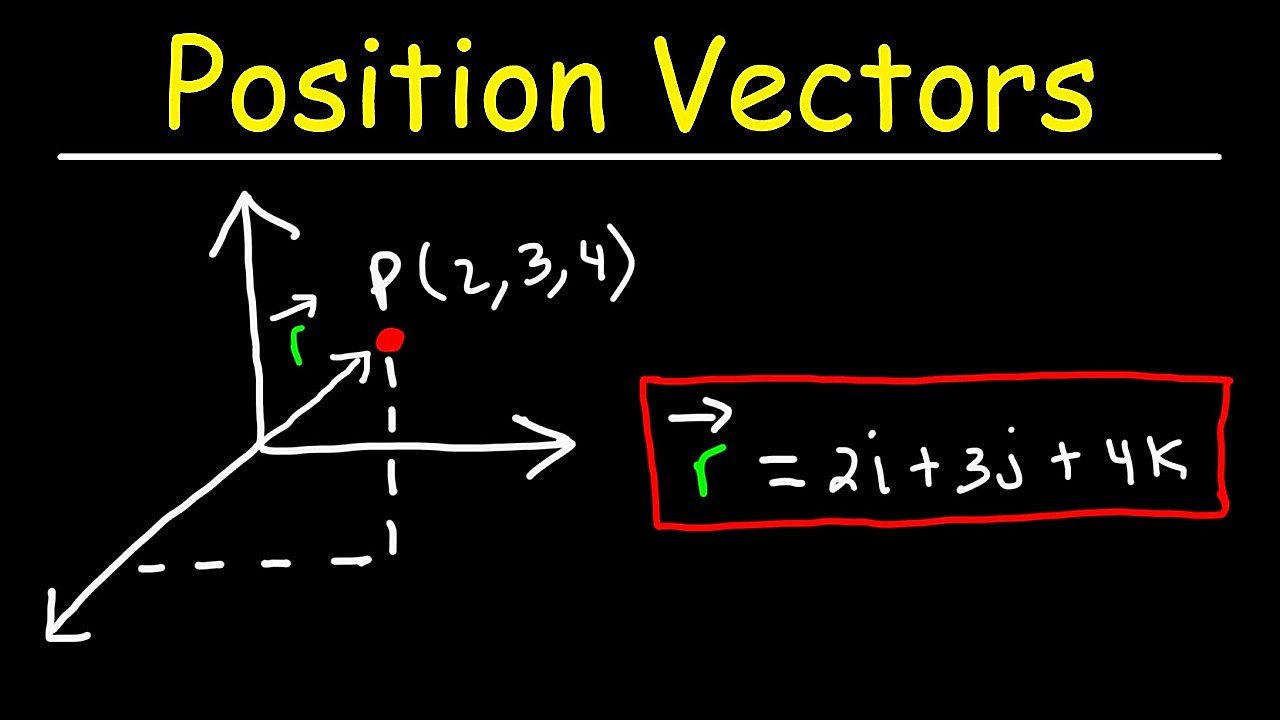
What Is Displacement in Physics?
Displacement is the change in position of an object. Displacement has a size and a direction, so it is a vector quantity. Displacement compares only the initial position and the final position, so it does not describe the total motion between them.
For a reliable reference, consult OpenStax section on position and displacement.
Examples of displacement include a person walking 2.0 m to the right, a passenger moving 4.0 m toward the front of a plane, and a car driving 5 km north.
What Is the Formula for Displacement?
The formula for displacement is Δx = x_f – x_0, which subtracts the initial position from the final position. The table below defines each symbol with its SI unit.
| Symbol | Quantity | SI Unit |
|---|---|---|
| Δx | Displacement along a line | m |
| x_f | Final position | m |
| x_0 | Initial position | m |
| Δr | Displacement vector in two or three dimensions | m |
The Greek letter Δ (delta) means change in the quantity that follows it.
What Is the SI Unit of Displacement?
The SI unit of displacement is the meter (m). Other units of length include the kilometer (km), centimeter (cm), mile (mi), and foot (ft).
Is Displacement a Vector or a Scalar?
Displacement is a vector quantity because a full description requires both a size and a direction. The magnitude of displacement is a scalar, such as 5 m. The direction is stated with a sign in one dimension or an angle in two dimensions, such as 53° north of east.
Can Displacement Be Negative or Zero?
Yes, displacement is negative when motion points toward the negative direction and zero when the final position equals the initial position. A positive sign indicates movement in the positive x direction. An airplane passenger who moves from x_0 = 6.0 m to x_f = 2.0 m has a displacement of -4.0 m. A runner who finishes a lap at the starting line has a displacement of 0 m.
What Is the Difference Between Displacement and Distance Traveled?
Displacement is the straight-line change in position with a direction, while distance traveled is the total length of the path. Some textbooks, including OpenStax College Physics, define distance as the magnitude of displacement and use the term distance traveled for the path length. The table below compares the two quantities.
| Feature | Displacement | Distance Traveled |
|---|---|---|
| Definition | Change in position from start to finish | Total length of the path |
| Quantity type | Vector | Scalar |
| Possible values | Positive, negative, or zero | Zero or positive |
| Depends on the path | No | Yes |
| Zero after a round trip | Yes | No |
| SI unit | m | m |
Does Displacement Depend on the Path Taken?
No, displacement depends only on the initial position and the final position. Two different paths between the same 2 points produce the same displacement but can have different distances traveled.
How Do You Calculate Displacement Step by Step?
Calculate displacement by subtracting the initial position from the final position and stating the direction. The steps are:
- Choose a reference frame and a positive direction.
- Record the initial position.
- Record the final position.
- Subtract the initial position from the final position.
- State the magnitude, sign or direction, and unit.
How Do You Calculate Displacement in Two Dimensions?
In two dimensions, displacement is the final position vector minus the initial position vector, and each position vector has x and y components. The equations are:
- Horizontal component: Δx = x_f – x_0
- Vertical component: Δy = y_f – y_0
- Magnitude: |Δr| = √(Δx² + Δy²)
- Direction: θ = tan⁻¹(Δy/Δx)
A person who walks 3 m east and then 4 m north has Δx = 3 m and Δy = 4 m. The magnitude is √(3² + 4²) = 5 m, and the direction is tan⁻¹(4/3) ≈ 53° north of east.
What Are Examples of Displacement Problems?
Four examples show how displacement differs from distance traveled. The table below lists each scenario with both quantities.
| Scenario | Distance Traveled | Displacement |
|---|---|---|
| A person walks 100 m east and then 100 m west | 200 m | 0 m |
| A person walks 3 m east and then 4 m north | 7 m | 5 m at 53° north of east |
| A runner completes 1 lap of a 400 m track | 400 m | 0 m |
| A passenger moves from x = 6.0 m to x = 2.0 m along a line | 4.0 m | -4.0 m |
How Is Displacement Related to Velocity and Acceleration?
Displacement connects to velocity through average velocity, which equals displacement divided by the time interval: v_avg = Δx/Δt. A car with a displacement of 100 m in 5 s has an average velocity of 20 m/s.
For constant acceleration, displacement follows Δx = v₀t + ½at². The AP Physics 1 exam reference sheet lists this relationship as x = x₀ + vₓ₀t + ½aₓt². See the AP Physics 1 formula sheet for the connected equation set.
Graphs show displacement in 2 ways:
- Position-time graph: the slope equals velocity.
- Velocity-time graph: the area under the curve equals displacement.
What Other Types of Displacement Exist in Physics?
Physics uses displacement in 3 other contexts: angular motion, simple harmonic motion, and waves.
- Angular displacement: the change in angle Δθ, measured in radians (rad), where 1 full rotation equals 2π rad.
- Displacement in simple harmonic motion: the position relative to the equilibrium point, with a maximum value equal to the amplitude A.
- Displacement in waves: the position of a medium particle relative to its resting position.
What Are Real-Life Examples of Displacement?
Displacement appears in 5 common situations:
- Navigation: GPS systems compute the straight-line offset between a start point and a destination.
- Aviation: flight planners compare the great-circle displacement with the flown distance.
- Marathons: a 42.195 km marathon on a looped course has a displacement of 0 km if the start and finish coincide.
- Elevators: an elevator moving from floor 2 to floor 10 has a displacement of 8 floors upward.
- Robotics: arms and vehicles track displacement from a reference position.
What Is the Summary of the Displacement Definition in Physics?
Displacement is a vector quantity that equals the change in position, Δx = x_f – x_0, and its SI unit is the meter. Displacement can be positive, negative, or zero. It depends only on the initial and final positions, while distance traveled depends on the full path.
People Also Ask: What Do Students Ask About the Displacement Definition in Physics?
What is the definition of displacement in physics?
Displacement is the change in position of an object.
What is the formula for displacement?
The formula is Δx = x_f – x_0, where x_f is the final position and x_0 is the initial position.
What is the SI unit of displacement?
The SI unit of displacement is the meter.
Is displacement a vector quantity?
Yes, displacement is a vector because it has both magnitude and direction.
Can displacement be zero if distance traveled is not zero?
Yes, a round trip that returns to the starting point has a displacement of 0 m and a positive distance traveled.
What is the difference between displacement and distance?
Displacement is a vector that depends on the start and finish positions, while distance traveled is a scalar that equals the total path length.
How do you find the magnitude of displacement in two dimensions?
Use |Δr| = √(Δx² + Δy²) with the horizontal and vertical components of displacement.

The University of the West Indies
My passion as a teacher and leader in education is to contribute to students’ enhanced learning by creation of a positive teaching/learning environment, where they are motivated to develop strong critical thinking, analytical and problem-solving skills.
As acting Vice-Principal and head of Physics, I have amassed five years of experience in leading meetings, implementing strategies to maintain discipline and school ethos, liaise with stakeholders in planning for future development of the institution; successfully negotiated the implementation of various projects for student development as well as supervising effective execution of such. For the past 19 years, I have incorporated discovery learning within the classroom through practical activities, problem solving and cooperative learning and have realized that students retention in Physics and Mathematics have increased significantly.
I am always cognizant that students have different learning styles, and as such teaching strategies during planning and delivery must take this crucial factor into consideration and be tailored to meet such differences.