

Physics C Equation Sheet: The College Board Reference Provided During AP Physics C: Mechanics and Electricity and Magnetism Exams
The Physics C equation sheet is a College Board reference that lists constants, unit symbols, and equations for the AP Physics C: Mechanics and AP Physics C: Electricity and Magnetism exams. College Board provides it during the entire exam. This article covers 2027 exam dates, sheet contents, access rules, exam format, and 57 study equations.
What Is the Physics C Equation Sheet?
The Physics C equation sheet is the College Board reference information booklet that students receive during AP Physics C exams. It contains a Table of Information, equation tables, and mathematical references. Each of the 2 Physics C exams has its own reference information.
College Board describes both exams as tests of calculus use. AP Physics C: Mechanics covers topics such as kinematics and linear momentum. AP Physics C: Electricity and Magnetism covers topics such as electrostatics and electromagnetism.
The table below lists the 2027 date, session, and calculator policy for each exam.
| Exam | 2027 Date | Session | Calculator Policy |
|---|---|---|---|
| AP Physics C: Mechanics | Monday, May 3, 2027 | Session 1 (morning) | Four-function, scientific, or graphing calculator |
| AP Physics C: Electricity and Magnetism | Wednesday, May 5, 2027 | Session 2 (afternoon) | Four-function, scientific, or graphing calculator |
The dates come from the College Board 2027 exam calendar. For most schools in the lower 48 United States, Session 1 starts at 8 a.m. local time and Session 2 starts at 12 p.m. local time.
Is the Physics C Equation Sheet Provided During the Exam?
Yes, College Board provides the equation tables during the entire AP Physics C exam. Students cannot bring personal copies into the exam room, according to the College Board Mechanics table policy.
The AP Central reference information page states 4 delivery rules:
- Printed booklets: schools receive printed reference information with exam shipments in the spring.
- Digital access: the same information is available in Bluebook during test preview and on exam day.
- Writing: students can write on the booklets.
- Collection: students cannot take the booklets out of the exam room during the break or after the exam.
Calculators are permitted on both sections of each exam, as stated in the Mechanics table policy.
What Is on the Physics C Equation Sheet?
The Physics C: Mechanics reference contains a Table of Information, mechanics equations with symbol definitions, and 4 mathematical reference sections. The 2025 version from College Board has 3 pages. The table below lists each part and its content.
| Part | Content |
|---|---|
| Table of Information | Constants, prefixes, unit symbols, trigonometric values for common angles, and exam conventions |
| Mechanics equations | Equations such as v = v₀ + at, with a definition for each symbol |
| Geometry and Trigonometry | Formulas for the rectangle, triangle, circle, rectangular solid, cylinder, sphere, and right triangle |
| Vectors | Vector relationships |
| Calculus | Calculus relationships |
| Identities | Mathematical identities |
The 2025 version is the most recent Mechanics reference reviewed for this article. AP Central hosts the version for each exam year.
What Constants Does the Physics C: Mechanics Sheet List?
The Physics C: Mechanics sheet lists 2 constants: the universal gravitational constant G and the acceleration due to gravity g. The table below gives each value from the 2025 reference.
| Constant | Symbol | Value |
|---|---|---|
| Universal gravitational constant | G | 6.67 × 10⁻¹¹ N·m²/kg² |
| Acceleration due to gravity at Earth's surface | g | 9.8 m/s² |
| Gravitational field strength at Earth's surface | g | 9.8 N/kg |
What Prefixes Does the Physics C Equation Sheet List?
The sheet lists 9 metric prefixes from tera (10¹²) to pico (10⁻¹²). The table below gives each prefix, symbol, and factor.
| Prefix | Symbol | Factor |
|---|---|---|
| tera | T | 10¹² |
| giga | G | 10⁹ |
| mega | M | 10⁶ |
| kilo | k | 10³ |
| centi | c | 10⁻² |
| milli | m | 10⁻³ |
| micro | μ | 10⁻⁶ |
| nano | n | 10⁻⁹ |
| pico | p | 10⁻¹² |
The sheet also lists 7 unit symbols: hertz (Hz), joule (J), kilogram (kg), meter (m), newton (N), second (s), and watt (W).
What Trigonometric Values Does the Physics C Equation Sheet List?
The sheet lists sine, cosine, and tangent values for 7 common angles. The table below gives each value.
| Angle | sin | cos | tan |
|---|---|---|---|
| 0° | 0 | 1 | 0 |
| 30° | 1/2 | √3/2 | √3/3 |
| 37° | 3/5 | 4/5 | 3/4 |
| 45° | √2/2 | √2/2 | 1 |
| 53° | 4/5 | 3/5 | 4/3 |
| 60° | √3/2 | 1/2 | √3 |
| 90° | 1 | 0 | undefined |
What Conventions Do the Physics C Exams Assume?
The Physics C: Mechanics exam assumes 3 conventions unless a problem states otherwise:
- The frame of reference is inertial.
- Air resistance is negligible.
- Springs and strings are ideal.
Which Equations Are Not on the Physics C Equation Sheet?
The sheet does not list every equation. The College Board equation tables document states that the tables exclude many equations derived by combining listed equations. The tables also exclude special cases of listed equations. The document adds that textbooks use different symbols for the same quantities.
What Equations Does Physics C: Mechanics Cover?
Physics C: Mechanics covers 7 equation groups: kinematics, forces, work and energy, momentum, rotation, oscillations, and gravitation. The table below is a study summary of 29 standard Mechanics equations. The official sheet determines the exact list shown on exam day.
| Topic | Quantity | Equation |
|---|---|---|
| Kinematics | Velocity with constant acceleration | v = v₀ + at |
| Kinematics | Position with constant acceleration | x = x₀ + v₀t + ½at² |
| Kinematics | Velocity from displacement | v² = v₀² + 2a(x – x₀) |
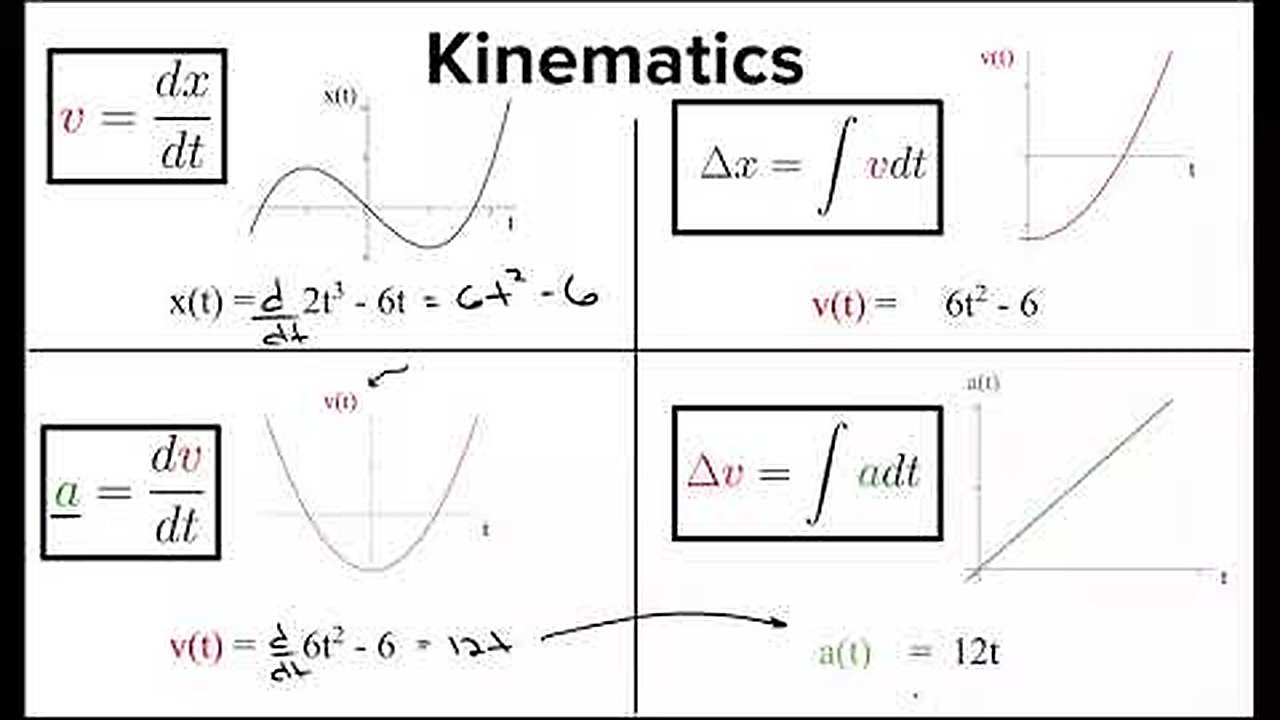
| Kinematics | Velocity from position | v = dx/dt |
| Kinematics | Acceleration from velocity | a = dv/dt |
| Forces | Newton's second law | ΣF = ma |
| Forces | Friction force | Ff ≤ μN |
| Forces | Spring force | F = -kx |
| Forces | Centripetal acceleration | ac = v²/r |
| Work and energy | Work | W = ∫F·dr |
| Work and energy | Kinetic energy | K = ½mv² |
| Work and energy | Power | P = dW/dt = F·v |
| Work and energy | Gravitational potential energy near Earth | ΔUg = mgΔh |
| Work and energy | Spring potential energy | Us = ½kx² |
| Momentum | Linear momentum | p = mv |
| Momentum | Impulse | J = ∫F dt = Δp |
| Momentum | Newton's second law in momentum form | ΣF = dp/dt |
| Momentum | Center of mass | xcm = Σmx / Σm |
| Rotation | Torque from force | τ = r × F |
| Rotation | Newton's second law for rotation | τ = Iα |
| Rotation | Rotational inertia | I = ∫r² dm |
| Rotation | Angular momentum | L = Iω |
| Rotation | Rotational kinetic energy | K = ½Iω² |
| Rotation | Tangential velocity | v = ωr |
| Oscillations | Period of a spring-mass system | T = 2π√(m/k) |
| Oscillations | Period of a simple pendulum | T = 2π√(ℓ/g) |
| Oscillations | Angular frequency | ω = 2πf |
| Gravitation | Gravitational force | F = Gm₁m₂/r² |
| Gravitation | Gravitational potential energy | U = -Gm₁m₂/r |
The list below defines the symbols used in the Mechanics table.
- v, v₀: velocity and initial velocity (m/s)
- a, ac: acceleration and centripetal acceleration (m/s²)
- x, x₀: position and initial position (m)
- t: time (s)
- m, m₁, m₂: mass (kg)
- F, Ff, N: force, friction force, and normal force (N)
- μ: coefficient of friction (dimensionless)
- k: spring constant (N/m)
- r, ℓ: radius or position, and length (m)
- W, K, U: work, kinetic energy, and potential energy (J)
- P: power (W)
- p, J: momentum (kg·m/s) and impulse (N·s)
- τ, I, α: torque (N·m), rotational inertia (kg·m²), and angular acceleration (rad/s²)
- ω, L: angular speed (rad/s) and angular momentum (kg·m²/s)
- T, f: period (s) and frequency (Hz)
- g, G: gravitational acceleration and gravitational constant
What Equations Does Physics C: Electricity and Magnetism Cover?
Physics C: Electricity and Magnetism covers 5 equation groups: electrostatics, capacitors, circuits, magnetism, and induction. The table below is a study summary of 28 standard E&M equations. The official sheet determines the exact list shown on exam day.
| Topic | Quantity | Equation |
|---|---|---|
| Electrostatics | Coulomb's law | F = (1/4πε₀)(q₁q₂/r²) |
| Electrostatics | Electric field | E = F/q |
| Electrostatics | Gauss's law | ∮E·dA = Q/ε₀ |
| Electrostatics | Electric potential from field | V = -∫E·dr |
| Electrostatics | Electric field from potential | E = -dV/dr |
| Electrostatics | Potential of a point charge | V = (1/4πε₀)(q/r) |
| Capacitors | Capacitance | C = Q/V |
| Capacitors | Parallel-plate capacitance with dielectric | C = κε₀A/d |
| Capacitors | Energy stored in a capacitor | U = ½CV² |
| Capacitors | Capacitors in parallel | Cp = ΣCi |
| Capacitors | Capacitors in series | 1/Cs = Σ(1/Ci) |
| Circuits | Current | I = dQ/dt |
| Circuits | Ohm's law | V = IR |
| Circuits | Resistance of a wire | R = ρℓ/A |
| Circuits | Electric power | P = IV |
| Circuits | Resistors in series | Rs = ΣRi |
| Circuits | Resistors in parallel | 1/Rp = Σ(1/Ri) |
| Circuits | RC time constant | τ = RC |
| Magnetism | Magnetic force on a moving charge | F = qv × B |
| Magnetism | Magnetic force on a current-carrying wire | F = Iℓ × B |
| Magnetism | Biot-Savart law | dB = (μ₀/4π)(I dℓ × r̂)/r² |
| Magnetism | Ampère's law | ∮B·dℓ = μ₀Ienc |
| Magnetism | Magnetic flux | Φ = ∫B·dA |
| Induction | Faraday's law | ε = -dΦ/dt |
| Induction | Motional emf | ε = Bℓv |
| Induction | Inductor emf | ε = -L dI/dt |
| Induction | Energy stored in an inductor | U = ½LI² |
| Induction | RL time constant | τ = L/R |
The list below defines the symbols used in the E&M table.
- q, Q: charge (C)
- F: force (N)
- E: electric field (N/C)
- V: electric potential or potential difference (V)
- r, ℓ: distance and length (m)
- ε₀, μ₀: vacuum permittivity and vacuum permeability
- κ: dielectric constant (dimensionless)
- C, Cp, Cs: capacitance, parallel capacitance, and series capacitance (F)
- A, d: area (m²) and plate separation (m)
- U: stored energy (J)
- I, Ienc: current and enclosed current (A)
- R, Rp, Rs, ρ: resistance, parallel resistance, series resistance (Ω), and resistivity (Ω·m)
- P: power (W)
- τ: time constant (s)
- B: magnetic field (T)
- v: velocity (m/s)
- Φ: magnetic flux (Wb)
- ε: emf (V)
- L: inductance (H)
What Constants Appear in Physics C: E&M Problems?
Physics C: E&M problems use 5 core constants: elementary charge, vacuum permittivity, the Coulomb constant, the speed of light, and vacuum permeability. The 2020 course and exam description table lists the values below, except the vacuum permeability, which is the standard value.
| Constant | Symbol | Value |
|---|---|---|
| Elementary charge | e | 1.60 × 10⁻¹⁹ C |
| Vacuum permittivity | ε₀ | 8.85 × 10⁻¹² C²/(N·m²) |
| Coulomb constant | k = 1/(4πε₀) | 9.0 × 10⁹ N·m²/C² |
| Speed of light | c | 3.00 × 10⁸ m/s |
| Vacuum permeability | μ₀ | 4π × 10⁻⁷ T·m/A |
What Is the Format of the Physics C Exams in 2027?
Each Physics C exam has 42 multiple-choice questions in 85 minutes and 4 free-response questions in 95 minutes, according to AP Central. Each section counts for 50% of the exam score. The table below summarizes the format.
| Section | Question Type | Questions | Time | Score Weight |
|---|---|---|---|---|
| I | Multiple choice | 42 | 85 minutes | 50% |
| II | Free response | 4 | 95 minutes | 50% |
The 2027 exam is a hybrid digital exam. Students answer multiple-choice questions and view free-response questions in the Bluebook app. Students handwrite free-response answers in paper booklets.
The 4 free-response questions follow 4 types:
- Mathematical routines
- Translation between representations
- Experimental design and analysis
- Qualitative/quantitative translation
The number of questions and the timing changed starting with the May 2027 exam. The College Board student page for E&M lists the 2026 format as 40 multiple-choice questions in 80 minutes and 4 free-response questions in 100 minutes.
How Do You Use the Physics C Equation Sheet During the Exam?
Use the equation sheet by matching known quantities to an equation that contains the unknown quantity. Follow these 6 steps:
- Identify the known and unknown quantities.
- Locate the matching topic on the sheet.
- Select the equation that links the known and unknown quantities.
- Verify the equation conditions, such as constant acceleration.
- Solve for the unknown symbolically.
- Substitute values in SI units.
What Is the Difference Between the Physics C Equation Sheet and a Personal Cheat Sheet?
The Physics C equation sheet is an official exam-room reference, and a personal cheat sheet is a study tool. College Board does not allow personal copies of equation tables in the exam room. The table below compares the 2 documents.
| Feature | Official Equation Sheet | Personal Cheat Sheet |
|---|---|---|
| Source | College Board | Student |
| Exam-room status | Provided during the entire exam | Not allowed in the exam room |
| Content | Constants, equations, and mathematical references | Custom notes, worked examples, and summaries |
| Primary use | Reference on exam day | Practice and review before the exam |
How Does the Physics C Equation Sheet Differ From Other AP Physics Sheets?
Each of the 4 AP Physics exams has its own reference information, according to AP Central. The table below lists the 4 exams and their math level.
| Exam | Math Level | Reference Information |
|---|---|---|
| AP Physics 1: Algebra-Based | Algebra | Own sheet |
| AP Physics 2: Algebra-Based | Algebra | Own sheet |
| AP Physics C: Mechanics | Calculus | Own sheet |
| AP Physics C: Electricity and Magnetism | Calculus | Own sheet |
Where Can You Download the Physics C Equation Sheet?
The Physics C equation sheet is available on College Board's AP Central website. Three official sources provide it:
- AP Central reference information page: reference sheets for each AP Physics exam
- Physics C: Mechanics reference PDF: the 2025 Mechanics sheet
- Bluebook practice: test previews with digital reference information
What Mistakes Occur When Using the Physics C Equation Sheet?
Four mistakes cause most errors with the equation sheet.
- Applying constant acceleration equations to variable acceleration
- Assuming derived equations appear on the sheet
- Mixing symbols, since textbooks use different symbols for the same quantity
- Ignoring exam conventions, such as negligible air resistance and ideal springs
What Do People Also Ask About the Physics C Equation Sheet?
Is there an equation sheet on the AP Physics C exam?
Yes, College Board provides equation tables during the entire AP Physics C exam.
Can you bring your own equation sheet to AP Physics C?
No, College Board does not allow personal copies of equation tables in the exam room.
Are calculators allowed on AP Physics C?
Yes, four-function, scientific, and graphing calculators are permitted on both sections of each exam.
Is the equation sheet the same for Mechanics and E&M?
No, each of the 4 AP Physics exams has its own reference information.
Can you write on the AP Physics C equation sheet?
Yes, students can write on the reference booklets, but cannot take them out of the exam room.
Does the equation sheet include calculus?
The 2025 Mechanics reference includes a calculus section.
When are the AP Physics C exams in 2027?
Physics C: Mechanics is on Monday, May 3, 2027, and Physics C: Electricity and Magnetism is on Wednesday, May 5, 2027.
How many questions are on the AP Physics C exam?
Each exam has 42 multiple-choice questions and 4 free-response questions in 2027.
What constants are on the Physics C: Mechanics sheet?
The 2025 Mechanics sheet lists G = 6.67 × 10⁻¹¹ N·m²/kg² and g = 9.8 m/s².
Where can you download the Physics C equation sheet?
The sheet is available on College Board's AP Central reference information page.
What Is the Physics C Equation Sheet in Summary?
The Physics C equation sheet is the College Board reference provided during the entire AP Physics C: Mechanics and Electricity and Magnetism exams. Each exam has its own reference information. The 2025 Mechanics version has 3 pages with constants, prefixes, unit symbols, trigonometric values, conventions, equations, and mathematical references. The 2027 exams have 42 multiple-choice questions and 4 free-response questions. Mechanics is on May 3, 2027, and E&M is on May 5, 2027.
SEO title: Acceleration Physics Meaning: Formula and 9 Types With Examples

The University of the West Indies
My passion as a teacher and leader in education is to contribute to students’ enhanced learning by creation of a positive teaching/learning environment, where they are motivated to develop strong critical thinking, analytical and problem-solving skills.
As acting Vice-Principal and head of Physics, I have amassed five years of experience in leading meetings, implementing strategies to maintain discipline and school ethos, liaise with stakeholders in planning for future development of the institution; successfully negotiated the implementation of various projects for student development as well as supervising effective execution of such. For the past 19 years, I have incorporated discovery learning within the classroom through practical activities, problem solving and cooperative learning and have realized that students retention in Physics and Mathematics have increased significantly.
I am always cognizant that students have different learning styles, and as such teaching strategies during planning and delivery must take this crucial factor into consideration and be tailored to meet such differences.